Your clitoral sensitivity is not a fixed thing
Here's what nobody tells you: the intensity level that felt perfect last Tuesday might be too much this Saturday. Your clitoris doesn't have amnesia. It's responding to hormonal shifts that happen predictably across your cycle, and once you map those shifts, you can actually use them to your advantage.
I'm not talking about feeling more or less "in the mood." That's a separate conversation. I'm talking about the actual physical sensitivity of your clitoral nerves. How quickly you respond to touch. How much stimulation feels good versus overwhelming. How your lemon vibrator performs when you're in different phases of your cycle.
How hormones shift your nerve sensitivity week by week
Estrogen and progesterone don't just regulate your period. They literally change how your nerves fire. Here's the basic map.
Menstrual phase (days 1-5). Estrogen and progesterone are both low. Your clitoris is less engorged, which means less blood flow to the area. This often means lower overall sensitivity. Paradoxically, some people find they want more intense stimulation during this phase because they need more input to reach the same level of arousal.
Follicular phase (days 6-13). Estrogen starts climbing as your body preps for ovulation. Your clitoral tissue becomes more engorged, more sensitive. The follicular phase is when many people report peak clitoral sensitivity. If you normally use your lemon vibrator on setting 3, this is when setting 2 might actually feel better. Your clitoris is more responsive, which means less intensity gets the job done.
Ovulation (days 14-16). Estrogen peaks right before ovulation, then dips sharply as progesterone rises. During the 24-48 hours of actual ovulation, sensitivity can feel almost heightened, but in a different way. Some people describe it as the clitoris being more easily stimulated but also quicker to feel overstimulated. Your sweet spot might narrow during this window.
Luteal phase (days 17-28). Progesterone dominates, and it dampens everything. Your clitoris becomes less engorged, less sensitive overall. Blood flow decreases. This is when many people naturally gravitate toward higher intensity settings. You might find yourself turning up your lemon clitoral vibrator from setting 2 to setting 4 or 5 just to feel the same sensation.
Why this matters when you're using a lemon vibrator
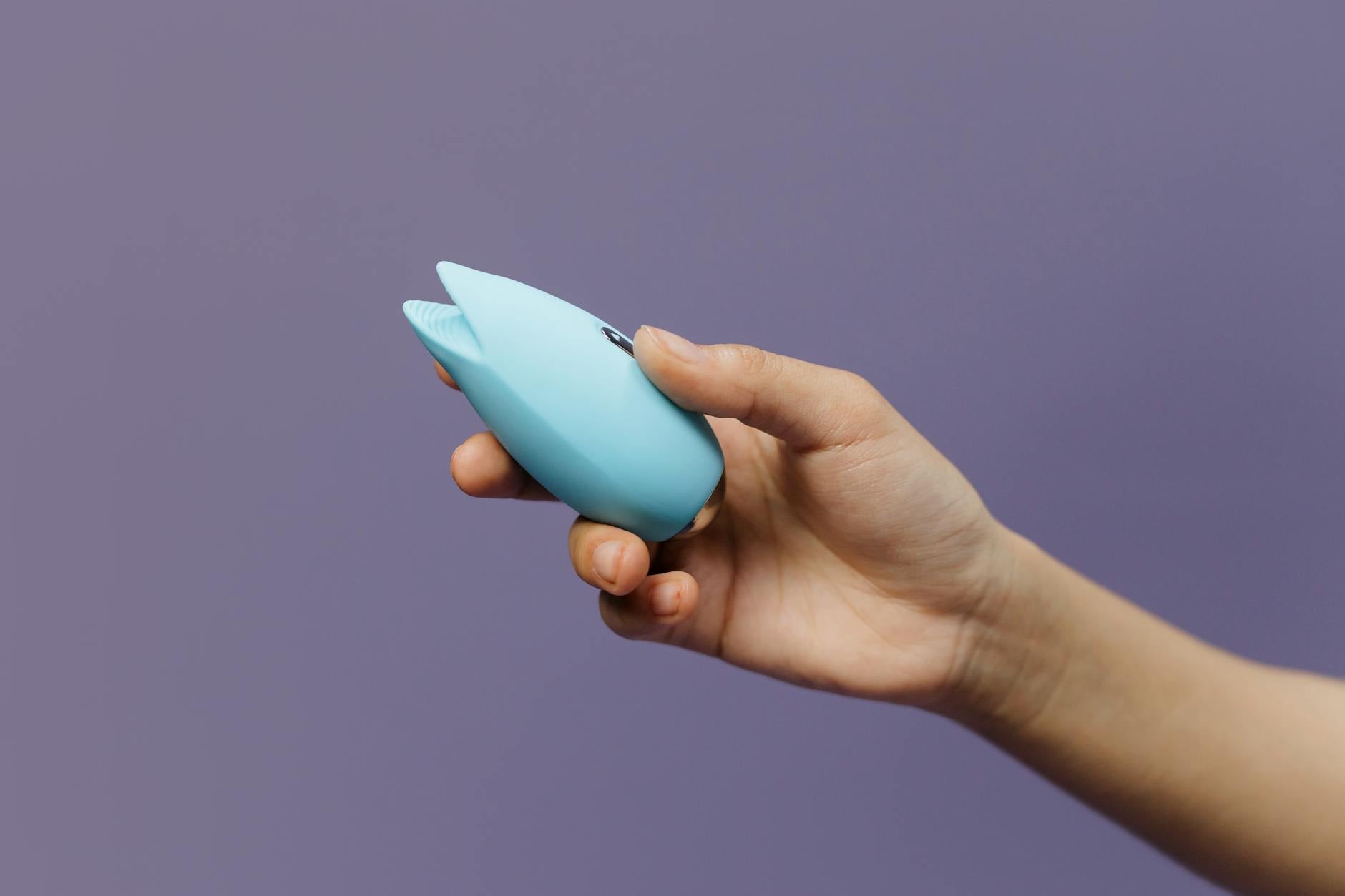
A lemon vibrator like the Lem works through suction and pulse patterns. Unlike friction-based toys, it doesn't require you to do much work. You position it and let the toy do the stimulation. That precision is exactly why cycle-based sensitivity shifts matter so much.
When your clitoris is hypersensitive (early follicular phase), that same suction pattern that felt amazing last week might feel jarring this week. You might need to drop down two intensity levels. When you're in the luteal phase and sensitivity is lower, you might crank it up.
The problem is most people don't think about this. They find a setting that works and stick with it year-round. Then they end up frustrated during certain parts of their cycle, thinking either the toy isn't working or something is wrong with them. Neither is true. Your body is just asking for a small adjustment.
Tracking your sensitivity across four cycles
Honestly, the best move is to pay attention for about four months. Keep a simple note on your phone or in your calendar each time you use your lemon vibrator. Write down the day of your cycle and which intensity level felt best. Did you need to adjust up or down from last time? Did you notice a pattern?
Within two to three cycles, you'll see it. Most people find they naturally want to dial down during the follicular phase and dial up during the luteal phase. Some people have a different pattern, especially if they have hormonal variations or are on hormonal birth control. But once you know your personal pattern, you can anticipate it.
The luteal phase is not the enemy
I want to push back on something I hear a lot: "I hate the luteal phase. I lose interest in sex. My sensitivity tanks." Yes, sensitivity is lower. But lower sensitivity is not the same as no pleasure. It's just different.
During the luteal phase, many people need more sustained stimulation, a bit more intensity, and longer warm-up time. That's not a bug. That's information. If you know you're in your luteal phase and your clitoris needs more input, you can stop fighting it and just lean into it. Use a higher setting on your lemon vibrator. Take more time. Stay with it longer. That phase is often when people have their most intense, sustained orgasms because you're not chasing a quick response. You're building to something.
When partners are involved, this becomes even more useful. If your partner understands that your cycle shifts your sensitivity, they stop taking it personally when you want a different approach mid-month. It's not that you suddenly don't want them. It's that your nervous system is literally asking for something different.
What throws cycle sensitivity off track
Stress compresses everything. High cortisol dampens arousal and sensitivity across the entire cycle. That week you're dealing with a work deadline or family chaos? Your clitoral sensitivity will probably be lower across the board, regardless of cycle phase. It's not your cycle lying to you. It's stress overriding hormone signals.
Hormonal birth control also reshuffles the whole pattern. If you're on the pill, patch, or ring, you don't have a real cycle. Your estrogen and progesterone levels stay relatively flat. This means your clitoral sensitivity doesn't shift much month to month, which some people love (predictability) and some people find boring (no natural rhythm).
Sleep debt and poor nutrition also muffle sensitivity. You can be in your peak follicular phase and still feel numb if you've had three nights of bad sleep.
How to adjust your lemon vibrator through your cycle
If you have a multi-setting device like the Lem, you're already set up to make these tweaks. Here's a practical framework.
Start by finding your "neutral" setting. Use your lemon clitoral vibrator when you're in the middle of your luteal phase (days 20-23) at a setting that feels good. Call that your baseline.
Then, as you move into your follicular phase, plan to dial down one or two settings. You'll probably be surprised at how good lower intensity feels.
Around ovulation, you might dial it down even further, or you might want to keep it steady. People vary here. The only way to know is to pay attention.
Back in the luteal phase, you'll naturally want to bump it back up to baseline or higher.
This isn't about forcing yourself into a pattern. It's about noticing what your body is already asking for and giving it permission.
The confidence piece
Here's what I've noticed in my work with couples and individuals: when people understand that their sensitivity shifts predictably across their cycle, they stop second-guessing themselves. You stop thinking "I was fine last week, why can't I get there now?" and you start thinking "Oh right, I'm in my luteal phase. I need to adjust my settings." That shift from self-doubt to self-knowledge changes everything.
Your pleasure is not broken. It's not inconsistent in some random way. It's responding to something real and measurable. Once you understand that, you can actually work with your body instead of against it.
Frequently asked questions
How long does it take to figure out my personal cycle sensitivity pattern?
Most people see a clear pattern within 2-3 cycles if they're paying attention. That's 2-3 months of noting which intensity setting felt best during each phase. Some people catch it faster, especially if they use their lemon vibrator regularly. The key is consistency. You need enough data points to spot the pattern.
Can I track cycle sensitivity if I'm on hormonal birth control?
Yes, but it will look different. Birth control flattens your natural hormone curve, so your clitoral sensitivity won't shift as dramatically week to week. That said, some people still notice subtle patterns, especially if they take a hormone-free week. Others find their sensitivity is simply steady across the month, which honestly is its own advantage. Just don't expect the same cycle-based rhythm you'd have without birth control.
What if my sensitivity pattern doesn't match what you described?
Then you have important information about your own body. Some people do have reversed patterns (more sensitive in the luteal phase, less in the follicular). Some people have barely any shift. Hormonal variations, thyroid issues, PCOS, and other factors can all reshuffle things. The point is not to fit a template. The point is to know your actual pattern and adjust accordingly.
Should I tell my partner about my cycle sensitivity shifts?
Absolutely, if you're partnered. This is practical information that changes how you have sex in a good way. "Mid-cycle I need gentler stimulation, and after ovulation I like more intensity" is not oversharing. It's communication that actually improves sex. How to introduce these conversations is something a lot of couples find helpful to approach together.
Does clitoral sensitivity change differently if I use my lemon vibrator every day versus occasionally?
Not dramatically, but there is a slight difference. Frequent use can build some tolerance, which means you might naturally gravitate toward higher settings over time. This is normal desensitization, not damage. If you want to reset it, taking a week or two off from your lemon vibrator usually brings back sensitivity. That said, frequent use that you actually enjoy is fine. Don't use it differently just to preserve sensitivity. Use it the way that feels good.
Is it normal for my orgasms to feel different throughout my cycle?
Completely normal. The orgasms you have around ovulation often feel more acute and peaked because of heightened sensitivity. Luteal phase orgasms often feel longer and more full-bodied because there's more sustained build. Neither is better. They're just different flavors. Once you stop expecting them to feel identical and start appreciating the variation, cycle sex becomes actually interesting.
If I notice my sensitivity has completely flattened, what could that mean?
Flat sensitivity across your entire cycle (not just during certain phases) can point to stress, sleep deprivation, depression, medication side effects, or hormonal imbalance. If it persists for more than a couple of cycles, it's worth checking in with your doctor. Learning more about clitoral vibrators and how your body responds can also help you track whether something has genuinely shifted or if you're just in a low-sensitivity season.
The bigger picture
Your body is not a machine with the same settings every day. It's a system responsive to hormones, stress, sleep, nutrition, and attention. Once you accept that your clitoral sensitivity shifts predictably across your cycle, you stop seeing those shifts as problems. You see them as information.
Your lemon vibrator is a tool that gives you precision. Use that precision to work with your body, not against it. Pay attention for a few months. Find your pattern. Adjust your settings accordingly. That small shift in how you approach pleasure can change how you experience your entire cycle.
If you're interested in exploring how your partner can support these shifts, or if you want to understand more about pleasure and cycle rhythm, our guide to using lemon vibrators with partners walks through the conversation in detail. Your body deserves that kind of attention. You deserve that kind of care.