
Here's the thing about vibrator settings
More intensity does not equal more pleasure. That's the lie that ruins people's first experience with a lemon vibrator or any clitoral vibrator. Your sensitivity isn't fixed either. It changes with your cycle, your stress level, how turned on you are, and honestly, what day of the week it is.
I've worked with hundreds of people who abandoned their vibrators because they jumped straight to the highest setting and either numbed themselves out or felt overwhelmed. The Lem vibrator has eight intensity levels and multiple patterns for a reason. Learning to use them strategically is the difference between a toy that collects dust and one that becomes part of your regular pleasure practice.
Why your clitoral sensitivity varies
Your clitoris has about 8,000 nerve endings packed into a tiny space. That's incredible density for sensation, but it also means it can go from "barely feel this" to "that's too much" in a single intensity notch.
Hormones shift your baseline sensitivity across your cycle. If you menstruate, your clitoris is typically more sensitive in the follicular phase (first half of your cycle) and less so during the luteal phase. Stress, sleep, and whether you've had an orgasm recently all tilt the dial.
Arousal is the biggest variable. When you're highly aroused, you can handle intensity you'd find painful at rest. This is why jumping straight into pattern 7 without warming up feels wrong. Your clitoris literally needs time to wake up.
The arousal principle
Think of your arousal as permission to increase intensity. Here's the template I recommend:
Before you touch the vibrator, spend 5-15 minutes getting aroused. Mental arousal, physical touch, whatever works for you. This isn't foreplay. This is priming. Your clitoris engorges, blood flow increases, sensation sensitivity sharpens. Skip this step and you're using a lemon vibrator on a cold engine.
Once you're genuinely turned on, start at patterns 1-3 (usually the gentler, simpler patterns on any Hello Nancy clitoral vibrator). Spend a minute there. Notice what sensations you're getting.
If it feels good but not intense enough, bump to 4-5. If it feels perfect, stay there. If it feels too intense, dial back. Your sweet spot might live at pattern 3. That's not low. That's calibrated to you.
The intensity spectrum for different sensitivity types
There's no universal "best" setting, but there are patterns. Here's what I see most often in my practice.
High sensitivity (easily overstimulated, numb quickly). Start at pattern 1. I know that sounds boring. It's not. Pattern 1 on a lem vibrator is still vibration. You'll feel it. Spend 3-5 minutes here, even if you think you want to move on. Your nervous system will actually relax more if you stay low longer. If you move to pattern 2, great. If you have an orgasm at pattern 1, that's perfect. You've just learned something real about your body.
Medium sensitivity (the most common range). Patterns 3-5 are your home base. You can likely spend entire sessions here and get everything you want. If you want to explore, start at 3, move to 4, then 5 only if you're chasing a specific sensation. Most people never need to go higher.
Low sensitivity (want more input to feel sensation). Patterns 5-7 work for you. Even so, warm up at pattern 3. You're not jumping to 7 immediately. Build. Your clitoris will respond better if you give it a gradient instead of a cliff.
Variable sensitivity (it changes, and you never know which version of yourself is showing up today). Start at pattern 3 every time. Always. This is your stable baseline. From there, you can add or subtract based on what you feel in that moment.
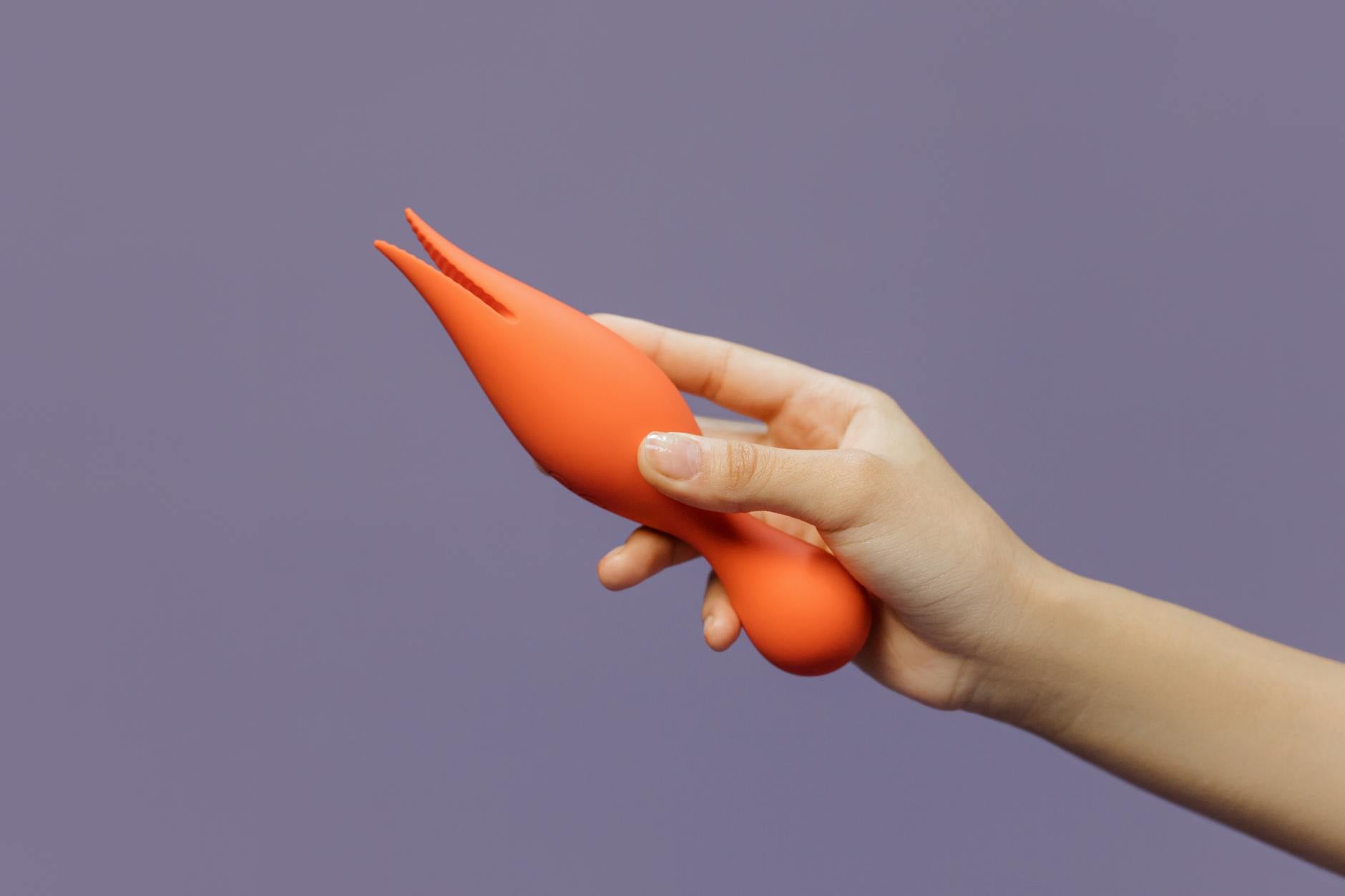
Photo by cottonbro studio on Pexels
Pattern versus intensity
Most people focus only on intensity, but the pattern matters as much or more. The Lem vibrator offers different pulse patterns (steady, waves, pulses, peaks) in addition to intensity levels.
A steady vibration at pattern 7 feels completely different from a pulsing pattern at level 7. Steady is constant stimulation. Pulses give your nerve endings micro-breaks. Waves feel like building sensation. Peaks feel like hitting points of intensity.
If you're using a steady pattern and it feels like too much, try switching to a pulse pattern at the same intensity level. You'll often find that pulse patterns feel gentler even though the peak vibration is identical. This is why experimenting with patterns matters as much as adjusting speed.
When you find a pattern and intensity combo that works, you don't have to change it. Some of my clients have used the exact same setting for months or years. Others rotate based on mood or time of month. Both approaches are fine.
The warm-up protocol that actually works
Most people skip warming up because they think they'll just get stimulated faster. Wrong. You'll feel more, orgasm more reliably, and actually enjoy it more if you build.
Here's my standard warm-up:
Minutes 1-3: Manual touch, no vibrator. Your hands on your vulva, exploring at whatever pace feels good. This wakes up nerve endings and lets your brain register arousal.
Minutes 3-5: Vibrator at pattern 1 or 2, low intensity. Let this be gentle. You're building arousal, not racing toward orgasm.
Minutes 5-7: Stay in the same pattern, OR move up one level if it feels like you want more.
From 7 onward: You're past warm-up. You know what you want. Adjust as needed.
This protocol takes less than ten minutes and transforms the experience. You'll feel more sensation, have more reliable orgasms, and walk away without that numb feeling that happens when you overstimulate right away.
Sensitivity changes with age and hormones
You might find that settings that worked last year don't work now. This is normal. Hormonal shifts change tissue thickness and blood flow, which directly affects sensitivity.
After 40, many people find they prefer slightly higher intensity because baseline sensitivity drops. If you're noticing this shift, know that it's not a problem. You're just recalibrating. Start by bumping your usual pattern up by one level and see how it feels.
If you're using hormonal birth control or have recently changed it, your baseline sensitivity might shift too. Hormonal IUDs, for instance, can lower estrogen in local tissues, which sometimes means you need a bit more stimulation to feel the same sensations you felt before.
This is where the warm-up protocol becomes even more crucial. Take extra time in the lower patterns. Your sensitivity might come back as you warm up, or you might genuinely need slightly higher intensity. Only your body knows.
Common mistakes and how to avoid them
Jumping to high intensity immediately. I've said this, but it bears repeating. Your clitoris doesn't want shock therapy. It wants a gradient.
Using the same setting every single time. Your body adapts. If you always use pattern 5, eventually pattern 5 might feel less intense because your nerve endings have gotten used to it. Rotate. Use pattern 3 one session, pattern 5 the next. This keeps your sensitivity responsive.
Not adjusting for arousal level. A day when you're highly aroused is not the same as a day when you're going through the motions. Honor the difference. Lower arousal = start lower and give yourself more time.
Assuming higher setting means better orgasm. Untrue. The best orgasm is the one that happens at the setting that feels best to you in that moment. Sometimes that's pattern 2. Sometimes it's pattern 7. Both are equally valid.
What to do if you're still numb
If you've warmed up properly, you're using appropriate intensity for your sensitivity level, and sensations still feel muted, a few things could be happening.
You might be anxious. Anxiety narrows sensation. If your mind is somewhere else (work, your partner, whether the door is locked), your body won't feel as much. This is normal and not a flaw. Spend a few minutes grounding yourself before you start.
You might be dehydrated or low on sleep. Both reduce nerve sensitivity dramatically. Drink water. Sleep. Come back tomorrow.
You might be on medication that affects sensation (certain antidepressants do this). That's worth a conversation with your doctor, not something to push through with a higher vibrator setting.
Or you might genuinely be someone who prefers firmer, more sustained pressure. In that case, a lemon vibrator might not be your tool. A different toy like a wand vibrator or a toy with stronger suction patterns might be better. That's not a failure. That's information.
Building a settings routine
Once you've figured out your baseline, you can get intentional about rotating for variety or responsiveness.
Some people keep a simple note on their phone: "Day 1 of cycle: use pattern 5. Day 15: try pattern 3." Others just notice what they're reaching for and go with it.
You can also experiment with combining settings in one session. Start with pattern 2 to build arousal, shift to pattern 4 for the bulk of stimulation, then use pattern 6 for the final push if you want that extra intensity at the end. This kind of strategic progression feels like a journey, not a constant.
The goal is to know your body well enough that picking up your lemon vibrator feels like picking up a favorite tool, not like you're starting from scratch every time.
FAQ: Finding your best lemon vibrator settings
How long does it take to figure out my best setting?
Usually 3-5 sessions. By the fifth time you use a lemon clitoral vibrator, you'll have a pretty clear sense of what works. That doesn't mean you'll never change it, but you'll have a baseline.
Can my best setting change?
Absolutely. Hormones, stress, sleep, where you are in your cycle, whether you've had caffeine, even what you've been thinking about all day. Your sensitivity is a moving target. That's not instability. That's your body responding to actual conditions.
Is it bad if I always use the same setting?
Not bad. But you might get diminishing returns over time. Your clitoris adapts to consistent stimulation. If you want to maintain sensation intensity, rotating settings (even just between two patterns) keeps your nerve endings responsive.
What if my partner and I like different intensities?
You don't have to use the same setting. If you're using a lemon vibrator together, experiment separately first so you each know your sweet spot. Then you can use your own settings when it's your turn, or you can find a compromise setting that feels good for both of you.
Does sensitivity mean I'm broken?
No. High sensitivity means you feel things intensely. That's actually an asset. You might just need to approach intensity differently than someone with lower baseline sensitivity. How to choose your first lemon clitoral vibrator covers this in more depth if you're still exploring.
Can I damage my sensitivity by using a vibrator too much?
Not from normal use. Temporary numbness during or right after use is normal (nerve endings tire briefly). Permanent damage would require extreme, sustained intensity way beyond what any Hello Nancy lemon vibrator delivers. You'd have to be actively trying to hurt yourself. Normal pleasure use is completely safe.
What if nothing feels good at any setting?
This usually signals something else is going on. Stress, hormonal shifts, relationship issues, or just a day when your body's not interested. It doesn't mean you're broken. It means this isn't the right moment. Come back when you're more curious than rushed.
The bigger picture
Finding your best lemon vibrator settings isn't about chasing intensity. It's about learning to listen to your body and adjust based on what's actually happening in the moment, not what you think should happen. How to use a lemon vibrator with your partner expands on this for partnered situations, but the principle is the same whether you're alone or with someone.
Your clitoris has preferences. Your job is to honor them, not override them. The more time you spend experimenting at lower intensities and different patterns, the faster you'll figure out what actually works for you. And once you know that, pleasure becomes less of a guessing game and more of a practice you look forward to.
Start low. Build slowly. Stay curious. Your body will tell you what it wants.