Let's start here
Trauma changes how your body responds to touch, pleasure, and intimacy. That's not weakness. That's how a nervous system that's been hurt learns to protect itself. The good news is that pleasure isn't gone. It's just behind a wall of caution that took real time to build, and it'll take real time and care to access again.
A Lemon vibrator can be part of that path, but only if you use it in a way that centers control, consent with yourself, and pace. Let me walk you through how.
Why vibrators can be healing tools for trauma recovery
When you've experienced sexual trauma or abuse, a partner's touch can feel unpredictable. Your nervous system stays hyperalert. Even consensual, loving touch can trigger a freeze response or dissociation because the body remembers threat patterns.
A vibrator is different. It's a tool you control entirely. You set the rhythm, the intensity, the duration, the pause. No surprises. No negotiating. No reading someone else's cues. This kind of autonomous stimulation can actually help your nervous system learn that pleasure and safety aren't mutually exclusive.
That said, this only works if you're genuinely willing and trauma-informed about the process. This isn't something to rush into or do because you think you should. Healing has its own timeline.
Building safety first
Before touching a Lemon vibrator or any vibrator, you need to establish what safety actually means for your body right now. Three questions to sit with:
What environment feels safe? This might mean a locked door, a specific room, a particular time of day when you're least likely to be interrupted. Trauma survivors often carry a subconscious fear of being vulnerable in space. Controlling the environment is not overthinking. It's essential.
What kind of touch or sensation triggers you? Some survivors find direct clitoral stimulation feels too intense or invasive early on. Others find that patterns that resemble how they were touched during trauma are activating. The Lemon clitoral vibrator's gentle suction can feel less aggressive than vibration alone, but you need to know what your own nervous system needs.
Do you have a grounding practice? Before you ever use any vibrator, practice coming back to your body when you feel panicky. This might be holding ice, pressing your feet into the floor, naming five things you see around you. A trauma-informed therapist can help you develop a solid grounding toolkit. That foundation matters more than the vibrator itself.
Starting with sensation mapping, not orgasm
The goal at first is not pleasure. It's curiosity. It's learning which parts of your body feel safe to touch, and which ones still carry charge.
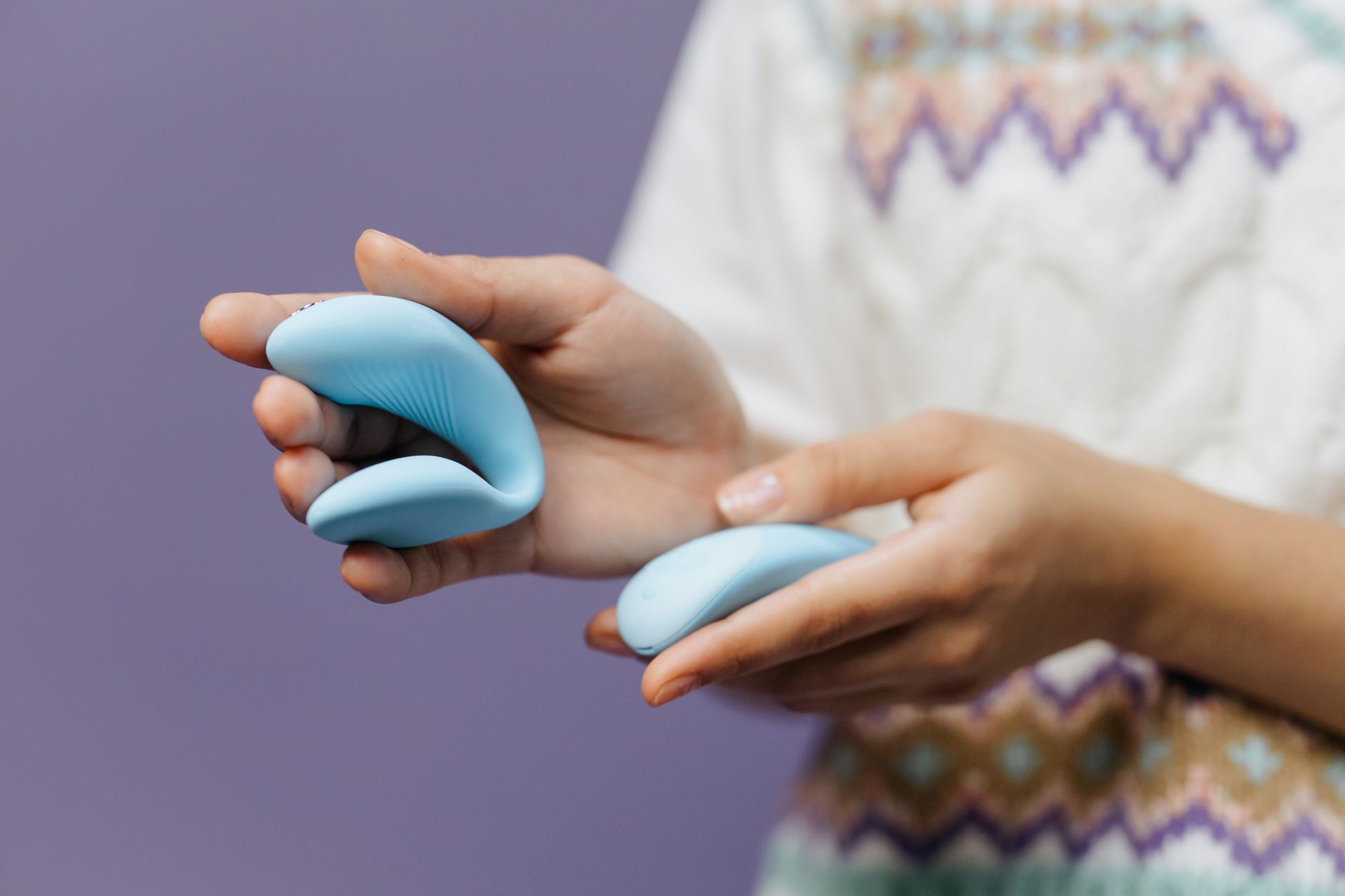
Start clothed. Hold the Lemon vibrator. Don't turn it on yet. Get comfortable with its weight in your hand. Feel the texture. Let yourself sit with that for a few sessions if you need to.
When you're ready, turn it on the lowest setting (pattern 1 on most Lemon models). Touch it to your inner forearm or the back of your hand. Not a vulnerable zone. Just feel the sensation without pressure. Does it feel pleasant? Neutral? Activating?
Over time, as your nervous system habituates, you might try the inside of your thigh, your stomach, your neck. You're building a map of what feels safe and what doesn't. There's no target here. No finish line. Some people spend weeks just in this phase, and that's exactly right.
When you do move toward genital touch
Remember: you can stop at any moment. You can pause. You can come back later. The vibrator will be there.
Start over your underwear or with a layer between you and the device if direct contact feels too exposed. Use the lowest intensity. The Lemon vibrator's gentle suction mimics the body's natural response to arousal, which many trauma survivors find easier to tolerate than sharp, high-frequency vibration.
Focus on rhythm, not speed. A slow, predictable pattern gives your nervous system less to interpret as threat. If your mind drifts into a flashback or dissociation, stop. Don't push through. That's your body communicating.
When dissociation or panic shows up
Dissociation is common after trauma. You might feel like you're watching your body from outside it, or like sensation becomes muted and dreamlike. This is your nervous system's old protective mechanism still running. It's not a sign you're broken. It's a sign you need to slow down.
If dissociation happens, pause the vibrator. Open your eyes if they're closed. Name specific things in the room. Feel your feet on the ground. The goal is to bring your awareness back into your body, not further away from it. If panic rises, stop completely. You can try again another day, or you might need professional support before you're ready.
A trauma-informed therapist, especially one trained in somatic (body-based) work, can help you understand why dissociation happens and how to work with it. This isn't something to white-knuckle through alone.
The role of your own pleasure preferences
After trauma, some survivors find that their orientation to pleasure has shifted. You might discover that you need something different than what you thought you wanted before the trauma. Or you might find that your authentic desires are still there, just buried under fear and protectiveness.
This is why understanding your own body without the pressure of partnered sex matters so much. Exploration alone with your Lemon vibrator gives you space to answer questions like: What intensity actually feels good to me, separate from what I think I should like? Do I prefer consistent rhythm or variety? Does my pleasure feel more emotional or more physical, or both?
These answers aren't permanent. Your needs might shift over time. That's normal. The vibrator is a tool for learning, not a script to follow.
Reintegrating pleasure with a partner, when you're ready
If you have a partner and you eventually want to include them, the first step is conversation outside the bedroom. Tell them what you've learned about your body. Tell them what feels safe and what doesn't. Tell them what you need them to do if you say stop, if you go quiet, if you ask for time.
Many partners of trauma survivors want to help but don't know how. Clear information is a gift to them. You might start by using your Lemon clitoral vibrator together without penetration or partner touch. Let them be present while you pleasure yourself. Let them see what your arousal looks like in a space that feels safe.
That's not selfish. That's actually more honest than most partnered sex ever gets.
What professional support looks like
If you're working through trauma, you deserve a trauma-informed therapist, ideally someone trained in somatic therapy, EMDR, or CPT (Cognitive Processing Therapy). These modalities recognize that trauma lives in the body, not just the mind. When recovery from trauma involves rebuilding sexual confidence, pairing a Lemon vibrator with professional support creates real change.
Your therapist isn't there to prescribe how you should feel about your sexuality. They're there to help you process the trauma, calm your nervous system, and reclaim agency over your body. That's the actual foundation. The vibrator is just a tool that becomes available once that foundation starts to hold.
Pacing yourself with self-compassion
Some days, the idea of pleasure will feel accessible. Other days, your nervous system will need rest. Both are okay. Healing from trauma isn't linear. You'll have weeks where sensation feels warm and easeful, and weeks where everything feels numb or too much.
This is where self-compassion matters more than any technique. Your body survived something it shouldn't have had to survive. The fact that you're willing to explore pleasure again, at your own pace, is remarkable. Not because you should be over it by now. Because you're honoring yourself by going slowly.
If you're struggling, reach out. A therapist can help. A support group can help. Your partner, if you have one, can help. You don't have to do this alone.
People also ask
Is it normal to feel anxious when using a vibrator after trauma?
Completely normal. Your nervous system has learned to be cautious around situations where you're vulnerable, and that includes being alone with your body and pleasure. Anxiety often decreases with repetition and safety over time, but you might benefit from grounding techniques or therapeutic support to build confidence. Start small, honor the pace your body needs, and know that anxiety itself isn't a sign you're doing something wrong.
Can a Lemon clitoral vibrator help with numbness after trauma?
Yes, but gently. Trauma can create emotional or physical numbness as protection. A vibrator can help you practice sensation mapping and gradually wake up nerve endings, but it works best combined with somatic therapy. The goal isn't to feel sensation instantly. It's to rebuild curiosity and trust in your body's feedback system over weeks and months.
What if I have a flashback while using a vibrator?
Stop immediately. Put the vibrator down. Ground yourself using whatever practice your therapist recommended: feet on the floor, ice in your hand, naming objects in the room. Flashbacks are involuntary. They're not a sign you've failed or that you're not ready. They're part of the healing process. Work with a trauma-informed therapist to understand what triggered the flashback and how to create more safety next time.
Should I tell my partner I'm using a vibrator to heal from trauma?
That depends on your relationship and your comfort level. Some survivors find that solo exploration helps them build confidence before involving a partner. Others feel safer being transparent from the start. There's no single right answer. If you do decide to share, frame it as information about your healing journey, not as blame or as an invitation to solve it for you. Your partner's role is to support your pace, not lead it.
How long does it take to feel pleasure again after trauma?
There's no timeline. Some people feel shifts in a few months. Others take years. The nervous system heals at its own pace, and that pace isn't linear. What matters is that you're moving toward pleasure intentionally, with support, and at a speed your body can metabolize. Rushing the process often backfires. Patience is actually the most efficient path.
Can vibrator use be retraumatizing?
It can be if you're pushing too fast, ignoring dissociation, or using it as a way to bypass grief. That's why professional support matters. A trauma-informed therapist can help you distinguish between the discomfort of healing and the activation of old wounds. They can also help you recognize when you need to pause and tend to something deeper.
Healing from trauma is slow work. It's asking your body to trust again, to feel again, to want again. A Lemon vibrator can be part of that journey. But the real healing happens in the spaces between. In therapy. In grounding. In learning that your pleasure matters enough to protect. You deserve that kind of care, and you deserve to take all the time you need.