Here's the thing about slow arousal
Your body is not misbehaving. It's just changed the timeline. And honestly, that timeline mismatch is one of the most common friction points in long-term relationships that nobody actually talks about.
When arousal takes longer, it's easy to blame yourself. "Why am I not turned on yet?" Or blame your partner. "Why aren't they doing enough?" But the actual problem is neither of those. It's that you're both operating on outdated scripts about how sex is supposed to go. Those scripts assume instant chemistry and a five-minute warm-up. Real life, especially in longer partnerships, almost never works that way.
Why arousal actually slows down
There are five common culprits. None of them mean something is wrong with you or your relationship.
Stress and mental load. If you're carrying the cognitive weight of your household, your job, or your family, your nervous system stays partially activated. Your brain is half in the bedroom and half on the to-do list. That's not a desire problem. It's an attention problem.
Familiarity without novelty. The neurochemical hit of new-partner energy is real. Over time, your nervous system stops firing on the same triggers. This isn't boredom. It's just your brain saying "I've already processed this input." Your body needs new stimulus to shift into arousal mode.
Hormonal changes. Birth control, aging, stress hormones, and thyroid shifts all affect how quickly blood flows to your genitals and how sensitive your nerve endings feel. This is physiological, not psychological.
Pelvic floor tension. When you're stressed or anxious, your pelvic floor tightens as a protective reflex. A tight pelvic floor actually suppresses arousal signals. Your body is literally bracing itself.
Disconnection from your own body. After weeks or months of survival mode, many people lose touch with physical sensation entirely. Your body isn't sending arousal signals because you're not listening for them.
What slow arousal actually needs
Longer foreplay is part of the answer, but it's not the whole answer. What really matters is shifting how you approach that time together.
First: stop treating foreplay as a sprint toward sex. Foreplay is not something that happens before the real event. Foreplay is the event. If you're thinking "let's do this so we can get to the actual sex," you're already losing. Your nervous system can feel that impatience, and it shuts down.
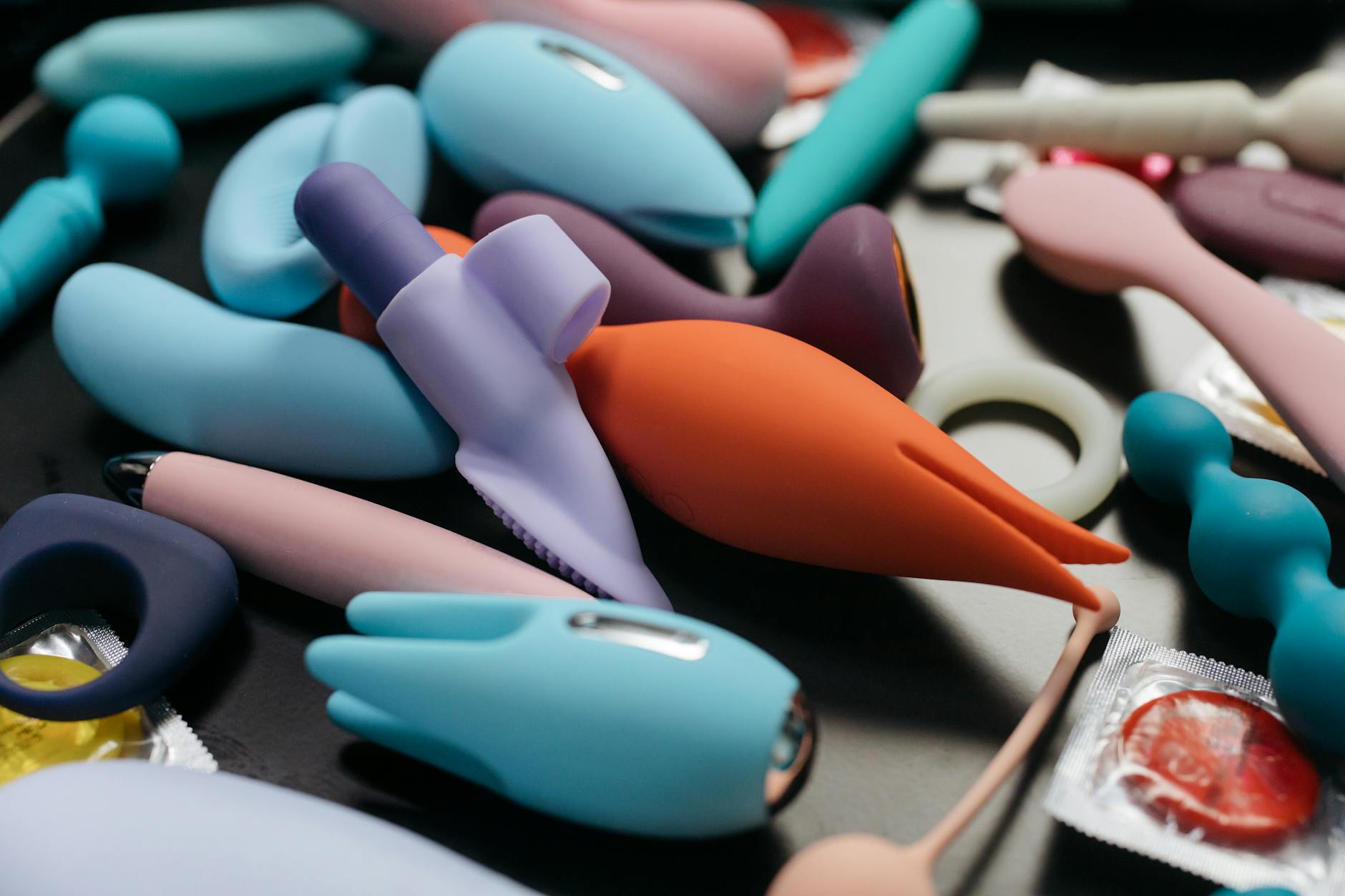
Second: bring in novelty without trauma. This doesn't mean you need new positions or expensive toys. It means changing the sequence, the location, the time of day, or the sensations. Switching to a clitoral vibrator like the Lem if you haven't used one before. Starting with your partner using toys on you instead of the other way around. Changing when you initiate from "always at night" to "Sunday mornings." Small shifts register as new to your nervous system.
Third: separate pleasure from performance. This is huge. If your partner is watching to see if you're turned on yet, you're performing arousal instead of experiencing it. The best warm-up includes actual separation. Your partner touches you while you're reading or listening to a podcast. You focus inward. They're not waiting for a reaction. They're just building sensation.
How to actually use a lemon clitoral vibrator in this situation
A vibrator like the Lem changes the game for slow arousal because it bypasses the need to wait for your body to do something on its own.
Here's the sequence that works:
Fifteen minutes of non-genital touch first. Your partner touches your shoulders, your neck, your inner wrists, your lower back. Nothing goal-oriented. Just presence. This activates your parasympathetic nervous system (the "rest and digest" mode where arousal actually happens).
Introduce the vibrator, but not on your genitals yet. Use the Lem on your inner thighs, behind your knees, along your collarbone. Let your nervous system get used to the sensation. The suction technology means you're getting broad stimulation, not intense focused pressure. This feels less clinical than a traditional vibrator and more like sustained sensation.
When you feel the first hint of arousal, move to your clitoris. Not before. This is crucial. You're not forcing arousal. You're meeting the arousal that's starting to arrive.
Your partner stays present, but not performative. They're touching you elsewhere, kissing your shoulder, talking to you softly. The vibrator is doing the clitoral work. Your partner is doing the connection work. This divides the labor in a way that actually works.
Take breaks. If arousal plateaus, pause. Don't push. Sometimes the sexiest thing is a few minutes of just lying together. Your body will signal when it's ready to go deeper.
The conversation you actually need to have
Using a lemon vibrator is the easy part. The harder part is naming this openly with your partner.
You need to say something like: "I've noticed arousal takes me longer now. That's not about you. It's just where my body is. I'd like us to plan for longer foreplay, and I'd like to use a vibrator. Not because you're not enough. Because I want to get there, and this helps." This prevents your partner from interpreting your slower arousal as lack of desire for them. It prevents them from trying harder and inadvertently creating performance pressure. It's just logistics.
Some partners feel relief hearing this. They've been anxious too. Others feel a tiny bit of ego sting, which is real and normal. Name that too. "I know you might feel like you're not enough. You're not the problem. Time is the problem. Let's solve it together."

Photo by Madison Inouye on Pexels
What changes when you stop fighting the timeline
Once you accept that arousal takes longer and you structure your sex life around that reality, something surprising happens. The sex often gets better.
Why? Because you're no longer in a race. Your nervous system is no longer fighting itself. You're actually present. You're actually feeling things instead of checking a box. And your partner, instead of being confused about why you're "not responding," understands exactly what's happening and how to be useful.
Longer foreplay also tends to mean deeper orgasms. When arousal builds slowly over 20 or 30 minutes instead of 5, your pelvic floor is more relaxed, your clitoris is more engorged, and your entire nervous system is more engaged. A lemon clitoral vibrator used in this context doesn't just get you off. It gets you deeper off.
Common questions about slow arousal and vibrators
Q: Does using a vibrator mean my partner isn't stimulating me enough?
No. It means you need a different kind of stimulation to warm up. Your partner's hands and mouth are wonderful. A vibrator is a different tool for a different job. Think of it like seasoning. You don't need your partner to be less if you're adding something new.
Q: Will my clitoris get used to the vibrator and need it to climax?
Unlikely with the Lem's suction technology, which works differently than traditional vibrators. The research on vibrator desensitization is mixed at best. What's actually happening in most cases is that people find what works and keep using it. You're not creating dependence. You're finding your pattern.
Q: How do I bring this up without hurting my partner's feelings?
Don't frame it as a problem with them. Frame it as a solution to a body thing. "I want to use the Lem because my arousal is slower now and I want us to have good sex. This will help me get there faster, which means more time for both of us." Most partners actually appreciate the clarity.
Q: Should we use the vibrator every time we have sex?
No. Mix it up. Use it sometimes, don't use it other times. Variety is its own kind of novelty. Some nights the vibrator is exactly what you need. Other nights you want to take your time without it. Let your body decide.
Q: What if my partner wants to use the vibrator on me but it feels weird?
It might feel weird the first few times. That's normal. A clitoral vibrator can feel more vulnerable to use with a partner because someone else is controlling the pace. If that feels uncomfortable, take control yourself first. Use it solo. Get familiar. Then let your partner take a turn when you feel ready.
Q: Does slow arousal mean I don't want my partner anymore?
Not at all. Wanting someone and needing more time to warm up are completely separate things. You can be wildly in love and still need 25 minutes instead of 5. This is actually a sign of a mature relationship that can adapt instead of one that breaks under pressure.
The bigger picture
Slow arousal isn't a problem to fix. It's a communication opportunity to seize. When you stop fighting your timeline and start building your sex life around it, everything gets easier. Your partner understands what you need. Your body gets what it needs. And the vibrator becomes a tool that brings you closer instead of a workaround for inadequacy.
Your pleasure matters. The time it takes matters. Your partnership's ability to adapt matters. That's not lazy sex. That's honest sex. And honestly? That's the kind worth having.
If you want more guidance on using lemon vibrators in partnership, check out our piece on how to use a lemon clitoral vibrator with a partner when you have different sensitivity levels. And if you're navigating bigger relationship shifts, how to use a lemon vibrator during couples therapy or relationship rebuild might help you think through the bigger picture.