Let's be real about the awkwardness factor
Bringing a vibrator into partnered foreplay can feel loaded. There's anxiety baked in. Will they feel replaced? Will it kill the moment? Will I have to give a TED talk about it? The answer to all three is usually no, but only if you know how to introduce it.
Here's what I've observed after years of working with couples: the vibrator itself is never the problem. The conversation around it is. Get that right, and the lemon vibrator becomes another tool in the foreplay toolkit, not a wedge between you.
The conversation that actually works
Don't wait for the bedroom. Talk about it before you're already half-undressed and someone's heart is pounding.
The frame matters. Instead of "I want to use a vibrator," try "I've been wanting to explore something that might feel amazing for both of us." That's collaborative language. It signals that this isn't a solo project.
If your partner has never been around a lemon vibrator before, show them how it works outside the bedroom first. Let them hold it. Let them feel the intensity settings. Demystifying the tool removes half the anxiety.
Then be specific about what you want: "I'd love to use this during foreplay when we're already turned on. You'd still be the one touching me most of the time, and this would just add something extra." That sentence tells them their role isn't being diminished.
Timing is everything
The worst time to introduce the vibrator is when arousal is already at a fever pitch and things are moving fast. The best time is when you're both warm but not yet frantic.
Start with manual foreplay first. Let your partner touch you, kiss you, build things up naturally. After 10-15 minutes, when you're clearly aroused and things feel easy and connected, that's when you reach for the lemon vibrator.
This timing does three things. First, it shows that the vibrator is an addition, not a replacement. Second, it means there's already a rhythm and intimacy between you, so the vibrator slides in smoothly rather than introducing mechanical elements to cold static. Third, it gives your partner something to do with their hands and mouth even after the vibrator is in the picture.
Five practical foreplay techniques
Technique 1: Hand and vibrator together. Your partner uses their fingers or tongue while you hold the vibrator against your own clitoris. This is the easiest entry point. It maintains their direct involvement while you get the sensation boost. The rhythm stays collaborative because they can feel when you're responding.
Technique 2: Your partner runs the vibrator. This requires a little trust calibration, but it's worth it. Your partner holds the lemon sucker and controls the speed while exploring where you like the sensation. Guide them verbally ("a bit lower," "faster") and they'll learn your map quickly. This version often deepens connection because they're paying close attention to your body's feedback.
Technique 3: Layered stimulation. You both work different zones. Your partner stimulates your breasts, neck, or inner thighs while you use the vibrator on your clitoris. This isn't simultaneous replacement. It's orchestration. You're each responsible for a part of the pleasure.
Technique 4: The pause and switch. Go back and forth between manual and vibrator stimulation. Your partner touches you directly, then you bring in the vibrator, then they switch back. This rhythm mimics foreplay that's already working, just with a new element. It keeps both of you engaged and the sensation varied.
Technique 5: Vibrator during penetration foreplay. If that's where you're heading, your partner can use the lemon clitoral vibrator against your clitoris while you're being manually stimulated or penetrated. This is particularly useful if you need clitoral input to orgasm during intercourse preparation. It's not replacing them. It's adding a dimension that helps you finish or stay fully aroused.
Managing intensity and sensation
Most lemon vibrators have multiple intensity settings. Start at the lowest setting. Not because you need to "ease in," but because you want to feel the difference between levels. If you jump straight to high, you won't know what you're missing.
As you're using the vibrator together, you can increase intensity if it feels right, or you can stay low and steady. There's no rule. The partner touching you should ask how it feels and whether they should adjust based on what they're seeing in your body and hearing from you.
If sensation starts feeling numb or dulled mid-foreplay, take a break. Shift to manual touch. The vibrator will feel fresh again in a few minutes.
What not to do
Don't hand over the vibrator and then disappear. Your partner might assume their job is now done. Stay connected. Kiss them. Touch them. Keep talking. The vibrator is an addition to the intimacy, not a replacement for it.
Don't assume one technique works every time. Foreplay is not a protocol. Some nights you might want how to use a lemon vibrator with sensate focus exercises to go slow and exploratory. Other nights you might want direct, fast stimulation. Let the mood guide you.
Don't use this as a way to avoid the actual conversation about pleasure and touch. The vibrator is the easy part. Talking about what you both want is the hard part. Do that first.

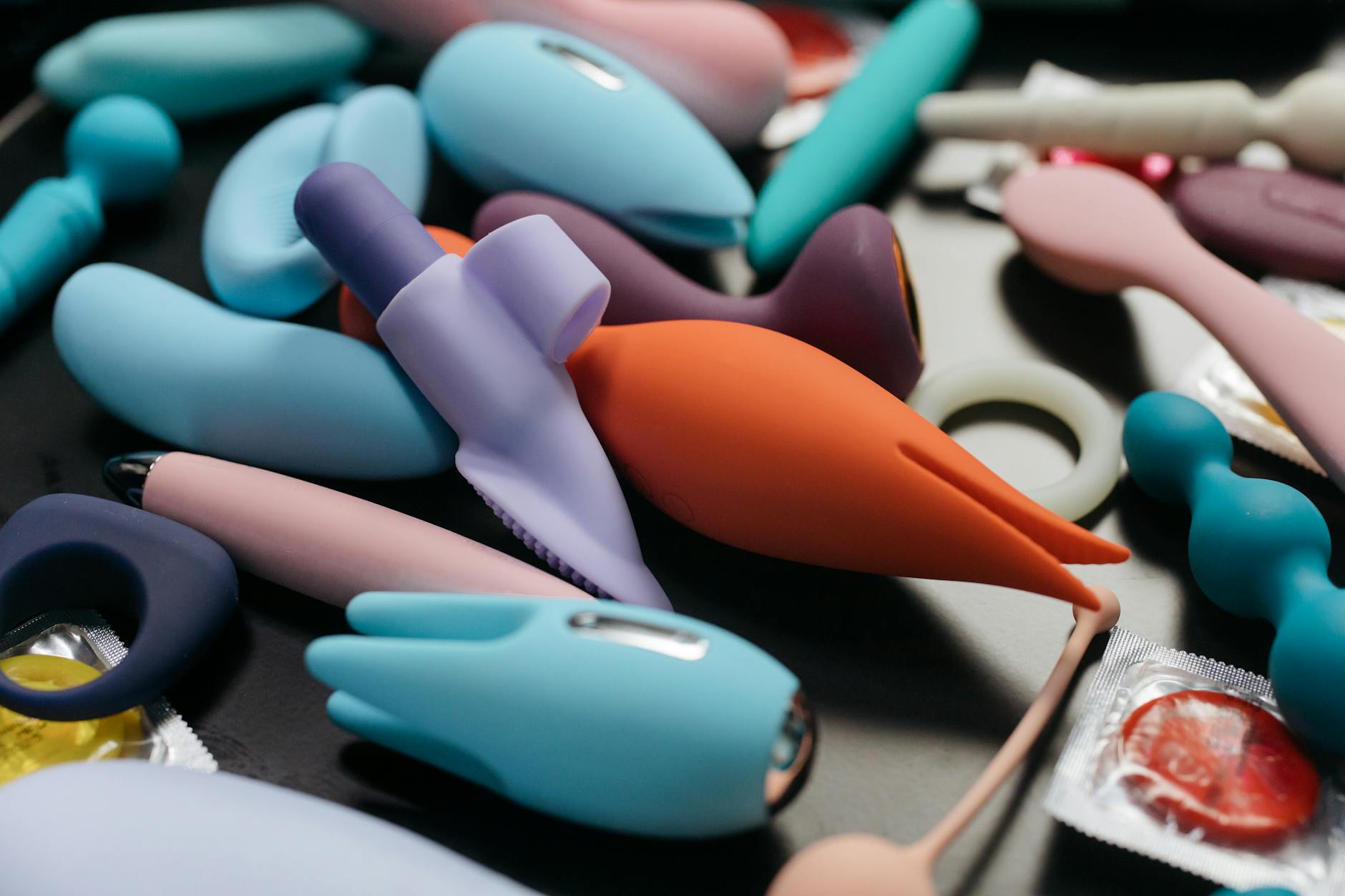
Photo by cottonbro studio on Pexels
When things feel off
If using the vibrator together feels awkward or creates tension, pause and actually talk about it. Don't just try again next time and hope it's better.
Common friction points: Your partner feels insecure. They worry the vibrator means they're not enough. This one requires a direct conversation where you say, clearly, that you want them present and involved. The vibrator isn't a substitution. You could also try Technique 1 or Technique 3 where they maintain active touch while the vibrator is in play.
Your partner doesn't know what to do with their hands. This is actually easy to solve. Give them a job. "Use your fingers inside me," "kiss my neck," "tell me what you like about this." Idleness breeds self-consciousness.
The moment gets clinical instead of sexy. If you're overthinking it, slow down. Skip the vibrator this time. Come back to it when it feels less like a project and more like play.
Reframing the vibrator in foreplay
Here's the shift I want you to make: the lemon vibrator isn't a crutch or an admission that something's missing. It's not a backup plan. It's a skill, like learning that your partner loves when you trace certain patterns on their skin, or discovering a particular angle that feels transcendent.
You're not using a vibrator instead of sex. You're using a vibrator as part of how you have sex.
Couples who integrate vibrators early in their sexual relationship often find that their foreplay deepens over time. Why? Because you're actively paying attention to what feels good instead of defaulting to the same pattern every time. You're communicating. You're collaborating on pleasure.
That's the real win.
FAQ: Common questions about lemon vibrators during foreplay
How do I bring up using a vibrator if my partner has never mentioned it?
Start outside the bedroom. Show them the Lemon Clitoral Vibrator or whatever model you're considering. Say something like, "I've been wanting to try this during foreplay and I'd love to know what you think." You're asking for collaboration, not permission. Frame it as something you want to explore together, not something you're doing to yourself.
What if my partner feels threatened or insecure?
Listen first. Let them name what feels scary or uncomfortable. Often it's not really about the vibrator. It's about feeling adequate or worried about performance. Once you know what's underneath, you can address it. Usually it helps to use techniques where they stay actively involved (like Technique 1 or 2) and to explicitly tell them how much you enjoy their touch alongside the vibrator.
Can I use a lemon vibrator during foreplay every single time?
Absolutely. Some couples do. Others use it sometimes. There's no standard. If it works and you both enjoy it, there's no reason to artificially rotate it out. That said, if you notice that foreplay without the vibrator feels flat or like something's missing, that's worth exploring. Are you both less connected on non-vibrator nights? Are you rushing through foreplay because you know the vibrator will "finish the job"? Check your own patterns.
Should my partner use the vibrator on me, or should I use it on myself?
Both work. Your partner using it lets them feel your responses and learn your body more deliberately. You using it gives you control over pressure and angle and lets them focus on other kinds of touch. Try different approaches depending on the night and your mood. There's no single right answer.
What if the vibrator stops the momentum or makes foreplay feel like a chore?
That's a signal that something's off with timing, communication, or setting. Slow down. Maybe the vibrator is being introduced too early or in a moment when neither of you is fully present. Maybe you need to have a clearer conversation about what you both want. Or maybe it's just not the right tool for this particular phase of your relationship. You can absolutely use lemon vibrators for solo play and skip them during partnered foreplay if that works better for you.
How often should we use a vibrator during foreplay?
There's no rule. Some couples use vibrators weekly, others a few times a year. Start with curiosity instead of frequency. Use it when it feels fun, not because you feel like you should. If you're reaching for it out of obligation or because regular foreplay feels boring, that's worth examining.
Moving forward with confidence
Integrating a lemon vibrator into foreplay isn't as complicated as anxiety makes it seem. Get the conversation right, choose your timing, and stay connected to each other. The vibrator becomes what it should be: one more way to explore pleasure together.