What disconnection actually feels like
Let's be real. Disconnection isn't usually dramatic. It's numb. You're in your body but also observing it from three feet away. Pleasure exists somewhere on a menu you can't quite read. You might be able to orgasm, or you might find yourself stuck in the mechanics of trying, watching yourself from the ceiling instead of feeling anything.
This happens to more people than you'd think. Trauma, chronic stress, anxiety, depression, medical transitions. Sometimes it arrives suddenly. Often it's been there so long you forgot what "feeling present" was supposed to feel like.
Here's the thing nobody tells you: your nervous system is not broken. It's doing exactly what it was designed to do. When your brain decides the world is too much, it mutes the signal. A lemon vibrator can help you turn the volume back up.
Why standard pleasure advice doesn't work when you're dissociated
Most vibrator guides assume you can feel sensation and want to amplify it. When dissociation is involved, that's backwards. You're not trying to chase intensity. You're trying to find the signal in the first place.
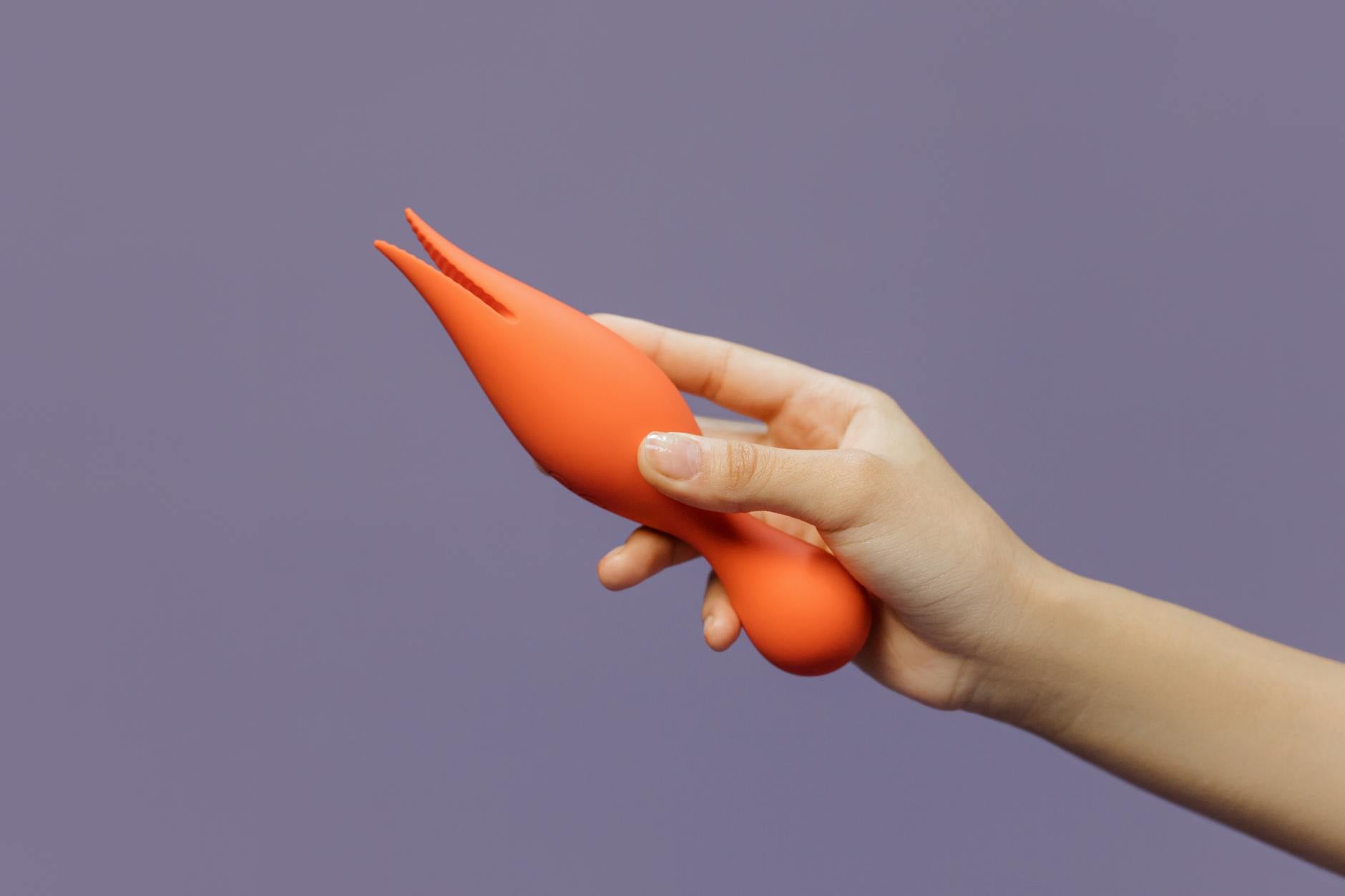
The air suction technology in tools like a lemon clitoral vibrator is actually useful here, but not for the reason you'd think. It's useful because the sensation is novel. Dissociation thrives on predictable stimulation. Once your nervous system learns the pattern, it tunes out. Air suction creates a rhythm that surprises your system enough to hold attention.
That said, intensity can backfire when you're already numb. You don't start with pattern 7. You start with awareness.
The reconnection protocol: four phases
Phase 1: Permission without expectation (days 1-3)
Take your lemon vibrator. Charge it. Hold it. Don't use it yet. Notice its weight. Its temperature. Its shape against your palm. Sit with it for five minutes. Your job is not to feel pleasure. Your job is to observe what's already there: texture, slight vibration, the sound it makes.
When you're dissociated, expectation is the enemy. The moment you think "I should be feeling something," you've left your body. So you're building a new muscle first: noticing without needing the experience to mean anything.
Phase 2: External sensation mapping (days 4-7)
Using a low setting (pattern 1 or 2), place your lemon clitoral vibrator somewhere neutral. Your inner wrist. Your forearm. Your collarbone. Somewhere that doesn't carry performance anxiety.
For two minutes, just sense it. What do you notice? A buzzing. A pulse. A slight vibration traveling through tissue. Not pleasure yet. Just sensation.
This is somatic grounding. You're teaching your nervous system that vibration equals presence. That there's something in the world you can feel and trust. Do this daily for at least four days.
Phase 3: Proximal approach (days 8-14)
Move closer to the vulva, but stay external. Inner thigh. The area between your vulva and thigh. Low abdomen. Use patterns 1-3 only. Spend five to ten minutes just noticing. Some days you'll feel more. Some days you won't. Both are correct.
Many people skip this phase because they want to get to "real" pleasure. But this is where the magic happens. Your nervous system is learning that it's safe to feel again.
Phase 4: Clitoral introduction (day 15 onward)
Only when you've genuinely noticed sensation in the previous phases. Place the lemon vibrator on the outside of your clitoris, not directly on it. Use pattern 1. Leave it there for thirty seconds, then move it away. Thirty seconds on. Move. Thirty seconds on.
You're not chasing orgasm. You're building tolerance to sensation without overwhelm. Some people need weeks of this. Others find their nervous system ready faster. There's no timeline.
The mechanics that actually matter
When you're dissociated, how you use your lemon sexual toy matters less than what you're thinking about while you use it.
Anchoring techniques work better than sensation techniques. Before you touch the vibrator to your body, pick something present. The temperature of the room. The sound of your breathing. The feeling of your feet on the ground. Hold that anchor in your mind while the vibrator is on.
Water-based lubricant helps, not because you need it physically, but because it's another sensory input. The cold sensation, the slickness, the change in texture. Your nervous system notices.
Timing matters too. Don't do this when you're already exhausted or emotionally depleted. Dissociation feeds on depletion. Pick a time when you've already eaten, slept reasonably well, and haven't just had a stressful day.

Photo by Anna Shvets on Pexels
What to do when nothing feels different
This is where patience separates progress from frustration. Some weeks you'll notice more. Some weeks you won't. This is normal. Your nervous system doesn't heal in a straight line.
If you've been in phase 2 or 3 for several weeks and genuinely feel no shift at all, change one variable. Try a different time of day. Try a different room. Try a different pattern (but stay low). Sometimes the issue isn't your body. It's the context.
If dissociation is tied to trauma, working with a somatic therapist alongside this practice helps. A therapist can teach you nervous system regulation techniques that make the reconnection protocol more effective. You're not using your lemon vibrator to replace therapy. You're using it as a tool that therapy makes more accessible.
The pleasure timeline is not linear
Some people move through all four phases in three weeks and then experience a sudden, unexpected orgasm that feels like their system just came online. Others spend three months gently rewiring their nervous system before anything resembling pleasure shows up.
Both are healing.
What matters is consistency and gentleness. You're not forcing your body. You're inviting it back. And invitation takes time.
When to pause and seek support
If at any point touching the vibrator, or being touched near your genitals, triggers panic or flashbacks, pause. This is not a sign you're doing it wrong. This is your body saying it needs professional support. A trauma-informed therapist or somatic practitioner can help you work through what's underneath.
Dissociation and trauma often go together. Rebuilding pleasure when trauma is involved isn't something you do alone with a lemon clitoral vibrator. It's something you do with professional guidance and your own nervous system's timeline.
The reconnection is the pleasure
There's this belief that pleasure is the orgasm, or the intensity, or the partner, or the performance. But when you're starting from dissociation, pleasure is something quieter. It's noticing that you can feel your thigh. It's realizing that your breath changes when the vibrator touches a certain spot. It's discovering that your body still has nerve endings.
That's all pleasure. That's all reconnection.
Your lemon sexual toy is just the vehicle. The real work is you deciding that your body deserves to feel present again.
People also ask
Can dissociation go away completely with a vibrator alone?
No. A lemon vibrator is a somatic tool, not a cure. Dissociation usually has roots in nervous system dysregulation, trauma, or ongoing stress. The vibrator can help you rebuild sensation and presence, but you'll likely need other interventions too: therapy, nervous system regulation practices, sometimes medication. Think of it as one piece of a larger healing puzzle, not the whole solution.
How do I know if I'm making progress if I can't feel anything?
Progress shows up in weird ways. You might notice your breathing changes. Your thoughts might quiet down while the vibrator is on. You might find yourself more present with your partner. Your sleep might improve. These are all signs your nervous system is responding, even if pleasure isn't the first thing to return. Track what you observe, not just what you feel.
What if my dissociation gets worse when I try to reconnect?
This can happen, especially if trauma is involved. Your nervous system might interpret the attempt to feel as dangerous. If this happens, stop. Tell a therapist. You might need to work with professional support before this practice becomes safe. There's no shame in that. It just means you need a different entry point.
Is it normal to feel more dissociated after using my lemon clitoral vibrator?
Yes, sometimes. New stimulation can overwhelm a dysregulated nervous system at first. If this happens, you went too fast or too intense. Back up a phase. Spend longer noticing external sensation before moving closer to the vulva. Your nervous system needs time to learn that feeling is safe.
Can I use my lemon vibrator while doing other grounding techniques at the same time?
Absolutely. In fact, combining practices usually works better. Try using your vibrator while noticing your breath, or while sitting with your feet on the ground, or while holding an ice cube in your other hand. These multimodal inputs help anchor you in your body more deeply than vibration alone.
Should I tell my partner I'm doing this reconnection work?
That's between you and your relationship dynamics. Some people find it helpful to tell their partner they're rebuilding sensation and need solo time for that. Others keep it private. What matters is that you're not adding performance pressure. If a partner is watching or expecting results, dissociation usually deepens. Give yourself permission to do this without an audience.
You don't have to feel to deserve reconnection
Rebuilding pleasure after dissociation isn't fast. Your nervous system got to this place for reasons. It'll take time to learn that the world is safe again, that your body is worth inhabiting.
Your lemon vibrator is patient. Your body is patient. You get to be patient with yourself too.
If you're struggling with dissociation or trauma and want professional support alongside this practice, reach out. We have resources and can point you toward therapists trained in somatic work. You don't have to do this alone.
Get in touch at Hello Nancy, and let's talk about what reconnection looks like for you.