Let's talk about what actually happens to your body after you become a parent
Your nervous system doesn't just change. It reorganizes. The parts of your brain that were designed to scan for danger (keeping a tiny human alive) now stay partially activated all the time, even when your kid is asleep or at school. Touch that used to register as pleasure gets filtered through this hypervigilance. You can technically feel it, but the signal doesn't land the same way it used to.
That's not a sign you've broken something. It's biology.
How parenthood rewires pleasure
Parenthood is constant low-grade activation of your sympathetic nervous system. You're monitoring, anticipating, managing. Meanwhile, pleasure lives in the parasympathetic system. It needs you to be truly relaxed, not just sitting down. Your brain needs to know it's safe to let its guard down completely. After years of responsible vigilance, your body forgets how to do that.
Four specific things happen:
1. Touch sensitivity dulls. Your nervous system downregulates sensation to conserve resources. You have only so much attentional bandwidth. If you're using it to notice whether your kid is crying, there's less available for noticing pleasure.
2. Spontaneous arousal disappears. You might still find your partner attractive, but that automatic spark of desire that used to happen without effort just doesn't anymore. Arousal becomes something you have to choose and create, not something that arrives on its own.
3. The touch-to-pleasure pipeline gets blocked. This is the strangest part. Your body can still physically respond. Your tissues work fine. But mentally, you've spent so long being touched by people who need something from you (nursing, holding, comforting) that consensual pleasure touch feels almost foreign. Your brain doesn't trust it yet.
4. Mental load eats desire. You're not avoiding sex because you're depressed (though you might be). You're avoiding it because the mental math of scheduling, managing logistics, and switching out of management mode feels harder than the actual sex.
Why a lemon clitoral vibrator helps specifically
Here's what's useful about a quality lemon vibrator for this particular transition.
First, it gives you control without requiring you to control anything. You turn it on. That's it. You're not directing your partner's touch, managing their pace, or worrying whether they're getting tired. The lemon vibrator does one thing with consistency. Your brain can actually relax into that.
Second, the suction-based design (if you're using a lemon sucker model) doesn't require the kind of direct pressure that can feel overwhelming when your nervous system is already in high alert. It's gentler, more enveloping. It works with your body's current sensitivity rather than against it.
Third, air-pulse technology stimulates a wider area of nerve endings at once, which can help reactivate pathways that have gone quiet. It's not about forcing intensity. It's about reminding your nervous system what pleasure feels like.
How to restart pleasure when you don't feel like you have time
This is the real constraint. You don't need a longer warm-up. You need a realistic one.
Start with five minutes. Not "eventually five minutes." Literally five. Tell your partner you need five. Set a timer on your phone. During that time, do nothing but notice what you're feeling in your body. Not trying to feel something. Just noticing.
Use your lemon vibrator starting at the lowest setting. You're not chasing an orgasm. You're teaching your nervous system that this is safe, pleasurable, and not another demand. Orgasm becomes a possible bonus, not a goal.
Do this three or four times before you add anything else. Before your partner joins in. Before you "make it count." Just you, five minutes, lowest setting, zero expectations. This sounds absurd when you're time-starved, but it's actually the path back to being able to have pleasure when your partner is involved.
Once that's comfortable, add 10 minutes. Increase intensity only if you want to, not because you think you should. A lot of parents discover they actually prefer lower settings now. That's not a loss. That's information about what your body wants right now.

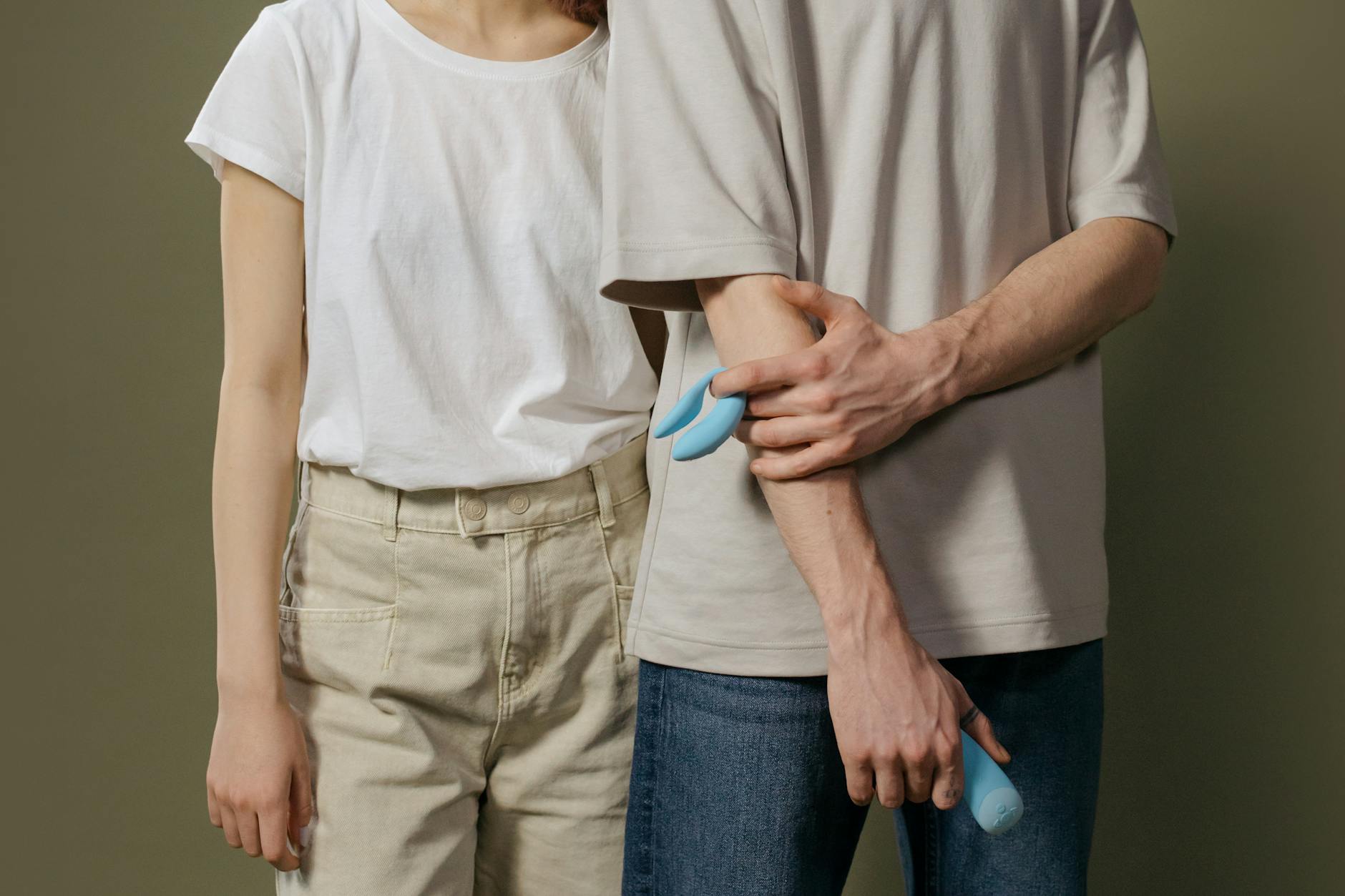
Photo by Madison Inouye on Pexels
Rebuilding pleasure with your partner present
Here's where it gets practical. You can't fix this alone. Not because you're broken, but because parenthood rewired your nervous system partially in response to relational stress. You need to practice being relaxed and pleasured while someone who cares about you is present.
Start by using your lemon vibrator with your partner in the room but not touching you. They're just there. They can read, they can be quiet, but they're physically present. This sounds small. It's not. Your nervous system gets to practice feeling safe and stimulated at the same time.
When that feels normal, have your partner touch you somewhere non-sexual while you use your vibrator. Your arm, your back, your hair. Nothing orgasm-focused. Just his or her hand on your body while you explore pleasure independently. You're teaching your nervous system that partner presence doesn't mean obligation or performance.
Once you've done that a few times, you can invite them to take turns. Maybe one session you use the lemon vibrator on yourself. Next time, they incorporate it while also touching you. You're slowly rebuilding the link between partner presence and your own pleasure, rather than partner presence and performance.
This probably sounds methodical and unsexy. That's because it is. But it works.
The emotional part (which is actually the bigger part)
Pleasure doesn't come back because you bought the right toy. It comes back when you give yourself permission to prioritize your own sensation in a relationship where you've spent years prioritizing everyone else's needs.
That's a shift. Probably a bigger one than you think.
A lot of parents I've worked with discover that using a lemon vibrator alone actually becomes meditative. It's 10 or 15 minutes where you're not managing anyone else's experience. You're not checking boxes. You're just noticing what feels good to you. In the context of years of "What does everyone need?" that becomes deeply restorative.
Don't rush that. Don't feel like you have to move it into partnered sex quickly just because you have a partner. Those solo sessions are doing important work. Your nervous system is learning that pleasure is legitimate for you. On its own. Without justification.
When you do bring pleasure back into your partnership, start with connection that's not goal-oriented. Kissing, touching, maybe mutual use of a vibrator. Things where orgasm is welcome but not required. A lot of couples discover their best sex after parenthood actually happens when they stop trying so hard to "make it work" and just explore what feels good right now.
When to get professional support
If this feels overwhelming or if you notice you're experiencing actual pain, that's worth mentioning to your doctor. Postpartum pelvic floor tension, hormonal shifts, or unresolved trauma can all impact pleasure. None of that is your fault, and most of it is very treatable.
If you're in a partnership and pleasure feels genuinely absent, individual or couples therapy can help untangle what's biological, what's relational, and what's circumstantial. Sometimes you need an actual human to help you sort it out.
But for most parents who are just experiencing the normal nervous system recalibration of early parenthood, patience and gentle exploration with a tool like a lemon vibrator actually works. You're not trying to get back to who you were before. You're building who you are now.
FAQ: Pleasure and parenthood
Why does pleasure feel different after I have kids?
Your sympathetic nervous system (fight-or-flight) stays activated to keep your child safe. Pleasure lives in the parasympathetic system (rest-and-digest). When one is chronically activated, the other can't fully engage. This isn't depression or lack of attraction. It's a nervous system that's been retrained by parenthood.
Is it normal to feel nothing when my partner touches me?
Completely normal. Not permanent, but normal. Your body has prioritized other types of attention for years. That rewires neural pathways temporarily. A lemon clitoral vibrator can help activate those pathways again because the consistent, controlled stimulation helps your nervous system remember what pleasure signals feel like.
How long before I feel like myself again?
There's no timeline. Some parents reconnect with pleasure in weeks of regular exploration. Others take months. Pressure to "bounce back" actually makes it worse because you're adding performance anxiety to already-stressed nervous system. Focus on consistency over speed. Three five-minute sessions per week beats one desperate hour-long attempt.
Can a vibrator replace what I need from my partner?
No, but it also doesn't have to. A lemon vibrator is a tool for rebuilding your own capacity for pleasure. Using one solo actually makes partnered sex better because you're not asking your partner to do something your nervous system isn't ready to receive. You're preparing yourself. That's actually more intimate in the long run.
What if my partner feels threatened by me using a vibrator?
That's worth talking about directly and probably with a therapist if it's a real tension. Here's the frame that sometimes helps: you're using this to rebuild your own pleasure so that you can bring more aliveness to your partnership. You're not replacing him or her. You're preparing yourself to be more present when you are together. Many partners find that seeing their partner prioritize their own pleasure actually makes them more attracted, not less.
Should I use the lemon vibrator during partnered sex?
Sure, if you want. But try it solo first. Use it with your partner present but not involved. Then together. Building that foundation solo actually makes partnered exploration way less pressured. You already know what you like. Now you're just inviting your partner into that.
You deserve to feel pleasure again. Not "eventually when the kids are older." Now. The reconnection starts with your own nervous system and permission to take it seriously, even when (especially when) you're short on time. A quality lemon vibrator becomes the tool for that work, but the real work is giving yourself permission to prioritize your own sensation. Everything else follows from there.
If you want to talk through specific questions about your situation, reach out. That's what I'm here for.