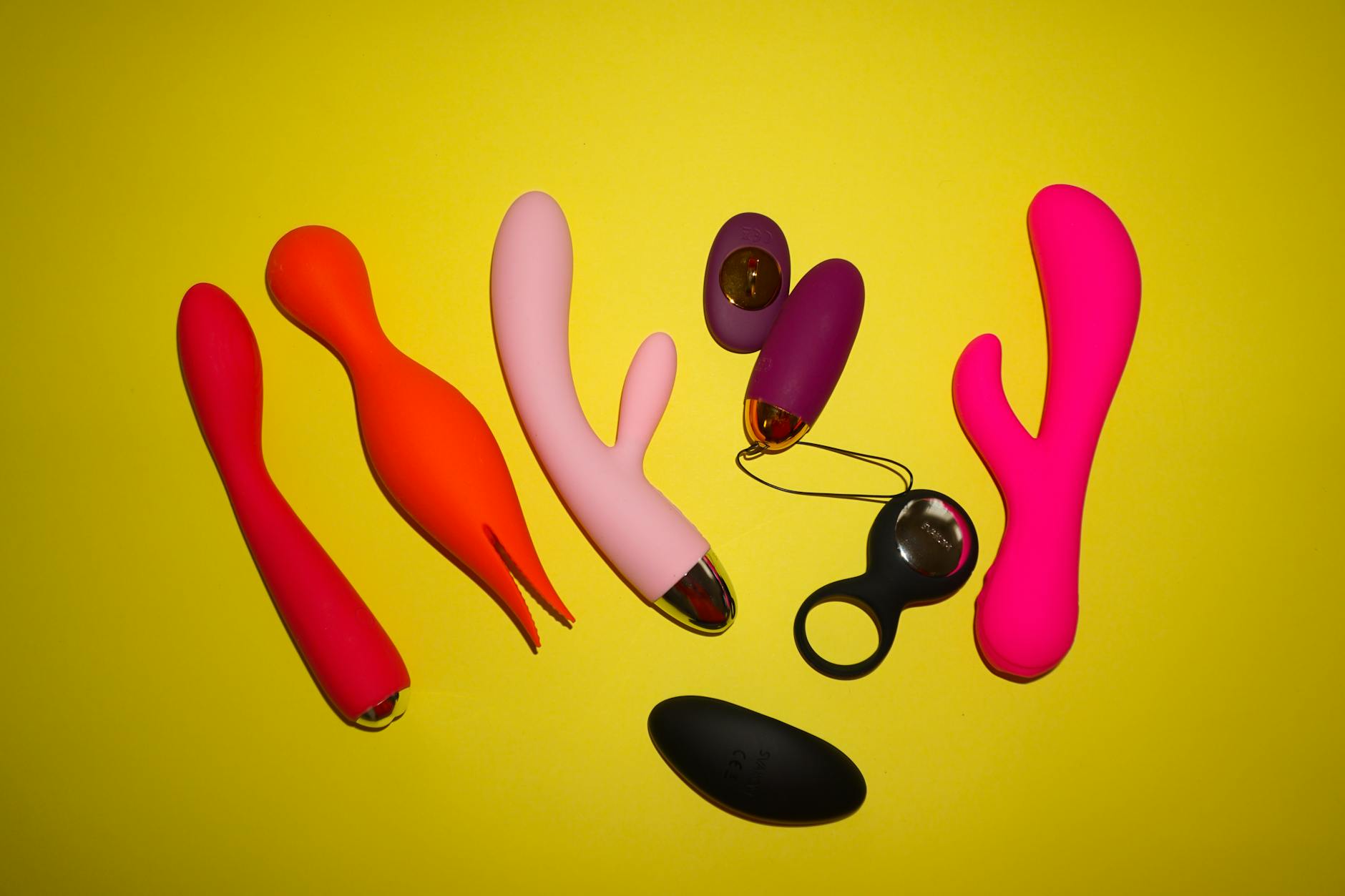
Here's what nobody tells you about aging and arousal
Sex doesn't disappear. It just takes longer to get started. That's not a failure. That's physiology. And honestly, once you understand what's actually happening in your body, you can work with it instead of fighting it.
Aroundthe mid-40s and beyond, arousal shifts. It takes longer to build. Your body needs more warmup time before things feel good. Lubrication changes. The clitoris may feel less sensitive to direct touch. That doesn't mean you're broken, losing interest, or on the way out. It means your sexual response has a different rhythm now. And with the right approach, you can actually find deeper satisfaction than you had before.
What actually changes physiologically
Three main things happen as hormones shift with age:
Blood flow takes longer. Your body's vascular response slows. When you're aroused, blood needs time to reach the genitals and stay there. At 25, that happens fast. At 45 or 55, it takes 15 to 25 minutes instead of five. This is completely normal.
Tissue changes. The vulva becomes less engorged during arousal. The clitoris might retract slightly. Your vaginal tissue thins and produces less natural lubrication on its own. Again, this isn't a malfunction. It's just how aging bodies work.
Sensation sensitivity shifts. The clitoris can feel less responsive to light touch. Many people need firmer, more consistent stimulation to feel pleasure. For some, the sensation is less localized and more diffuse. For others, it becomes sharper and more direct.
What doesn't change: your capacity to orgasm. Your desire (if it was there before). Your ability to feel genuine pleasure.
Why longer warmup time is actually an asset
I know this sounds counterintuitive. But slow arousal isn't a bug. It's a feature you can use.
When you have time to warm up, your nervous system has time to settle. You're not rushing. You're not thinking about what's next. That extended buildup means deeper arousal when it finally lands. Many people in their 40s and 50s tell me their most intense orgasms come with this slower rhythm.
The trick is giving yourself real time. Not five minutes. Not "well I'll start and see what happens." Budget 20 to 30 minutes for warmup before you bring in tools like a Lemon clitoral vibrator. Start with touch, kissing, or solo exploration. Let your blood pressure rise gradually. Then bring in the toy.
How a lemon vibrator works with aging bodies
Clitoral vibrators like the Lem are specifically useful when sexual response slows because they:
Provide consistent stimulation without fatigue. Your hands get tired. A vibrator doesn't. You can use sustained pressure and pattern for as long as you need without your arm giving out. This matters when you're working with slower arousal.
Work with reduced sensitivity. The Lem's suction pattern stimulates rather than just vibrates. That pattern engages more nerve endings than straight vibration alone. Many people with reduced clitoral sensitivity feel the Lem more acutely than they do traditional vibrators.
Let you control intensity precisely. Start at pattern one or two. Your body will warm up over those 20 minutes. You can increase intensity as you go, matching your body's actual responsiveness. You're not stuck with one speed.
Remove pressure to perform. With a tool that does the work, you can focus on sensation instead of mechanics. Your partner (if you have one) can be present without the pressure of maintaining contact.
The practical setup that actually works
Let's talk about real logistics.
First, time it right. If you're naturally more sensitive at certain times of the day, use that window. Some people feel more aroused in the morning. Others do better in the afternoon. Work with your body's actual rhythms, not against them.
Second, build in the warmup. Touch, kissing, mental focus. Spend 15 to 20 minutes on arousal before you bring in a vibrator. Your body needs that time to shift into gear. Rushing skips the setup and then blames the tool for not working.
Third, use lubrication. Even if you had no issues before, slower blood flow means less natural lubrication. A good water-based lube reduces friction, makes stimulation feel more comfortable, and often makes orgasm easier to reach. This is practical, not a sign of anything wrong.
Fourth, start at lower intensity. The Lem has multiple patterns. Begin at one and two. Let your body adjust. You can increase as arousal builds. You're not trying to jump straight to the strongest setting.
Fifth, expect variation. Some days you'll feel more sensitive than others. Some sessions will build quickly. Others will take longer. That's not failure. That's normal. Keep going anyway.
When sensation feels inconsistent or frustrating
Here's a common frustration: you follow all the steps, and it still takes longer than you want, or the sensation feels uneven. Some areas of the clitoris feel responsive. Others feel numb.
This is actually common, and there are specific things that help:
Take breaks. You don't have to build continuously for 30 minutes straight. Stimulate for five minutes, then rest for two. Then go again. Your nervous system responds better to variation than constant input.
Change angle and pressure. The clitoris has a head (the visible part) and a shaft (underneath, usually less accessible). Angle the vibrator differently to target different areas. You might find your sweet spot isn't directly on top.
Use your breath. This sounds abstract, but it works. Deep breathing increases blood flow and arousal. When sensation feels stalled, slow down and breathe consciously for a minute. You'll often feel a shift.
If one area feels numb, that's okay. Move to a nearby area. The clitoris has nerves throughout. Not every millimeter will feel equally sensitive, and that's fine. Find what works and stay there.
The mental shift that changes everything
This is the part nobody talks about, and it's possibly more important than the physical changes.
When you're young, sex often happens almost by accident. You're both willing, things happen quickly, done. There's no strategy. With slowed arousal, you have to be intentional. And that intentionality is actually where deeper satisfaction lives.
You have to decide that this time matters. You have to choose to be present instead of checking your phone. You have to communicate what you want instead of hoping your partner figures it out. That's not a burden. That's the difference between sex that's pleasant and sex that's genuinely fulfilling.
Many people find their best sexual experiences happen after 45 because they finally have permission to make it about their actual pleasure instead of their perceived role in someone else's satisfaction.
When to talk to a doctor
If pain appears during sex or with stimulation, don't ignore it. Genitourinary syndrome (GSM) is real and treatable. A topical estrogen cream can change things in weeks.
If you're on medications that affect arousal, blood pressure meds especially, ask your doctor if there are alternatives. Sometimes switching one medication shifts everything.
If arousal has dropped completely and nothing is building, it might be worth checking your thyroid and hormone levels. Sometimes it's not aging. Sometimes it's an underlying condition that has a fix.
But most of the time? Slower arousal isn't a medical problem. It's a normal variation of human sexuality as we age. And it's completely workable with the right information and the right tools.
FAQ
How much longer should sexual response take as I age?
There's wide variation, but most people find that arousal takes 15 to 30 minutes instead of five to ten. Some people experience changes earlier, some later. If it suddenly changes dramatically (like from normal to an hour or more), check in with a doctor. But gradual lengthening is typical.
Does using a vibrator like the Lem make arousal even slower long term?
No. Using a vibrator doesn't cause slower arousal or reduce sensitivity over time. Your body won't become dependent on it. You're just using a tool that works with your current physiology. Many people who use vibrators regularly report that they actually feel more connected to their pleasure overall.
Should I use a lemon clitoral vibrator during foreplay with a partner or solo?
Both work. Solo, you have full control and no performance pressure. With a partner, it removes the physical fatigue of manual stimulation and lets them be present in other ways. Some people find they need solo time to understand their own response before adding a partner back in. All three approaches are valid.
What if the Lem doesn't feel like much at first?
Give it time. You're probably in the early part of your arousal window. You should feel it more as you warm up. Start with lower patterns and let your body build. If after 20 to 30 minutes of consistent use it still feels like nothing, you might not be fully aroused yet. Come back to it another time. Your body isn't wrong for needing more time.
Is it normal to feel sensation inconsistently throughout a session?
Completely normal. Your nervous system isn't a light switch. Sensation waxes and wanes. You might feel very responsive for five minutes, then a little less responsive, then responsive again. Stay patient. The goal is overall arousal and pleasure, not constant identical sensation the whole time.
Can my partner help with slower arousal instead of me just using a vibrator?
Absolutely. The key is extending the warmup phase together. More time with kissing, touch, and focus before anything penetrative or orgasm-focused. Many couples find this actually strengthens connection. Adding a tool like the Lem can also help your partner not exhaust their arms while giving you the stimulation you need. It's not an either/or. It's both working together.
You don't have to adapt alone
If slower arousal feels frustrating, that's real. You might be grieving the speed you used to have. That's okay. But slower doesn't mean worse. It means different. And once you stop fighting the difference and start working with it, you often find pleasure you didn't have access to before. A Lemon clitoral vibrator is just one tool that helps you meet your body where it actually is, not where you think it should be. That shift from frustration to acceptance is where everything opens up.
If you want to talk through your specific situation, we're here. Reach out anytime.