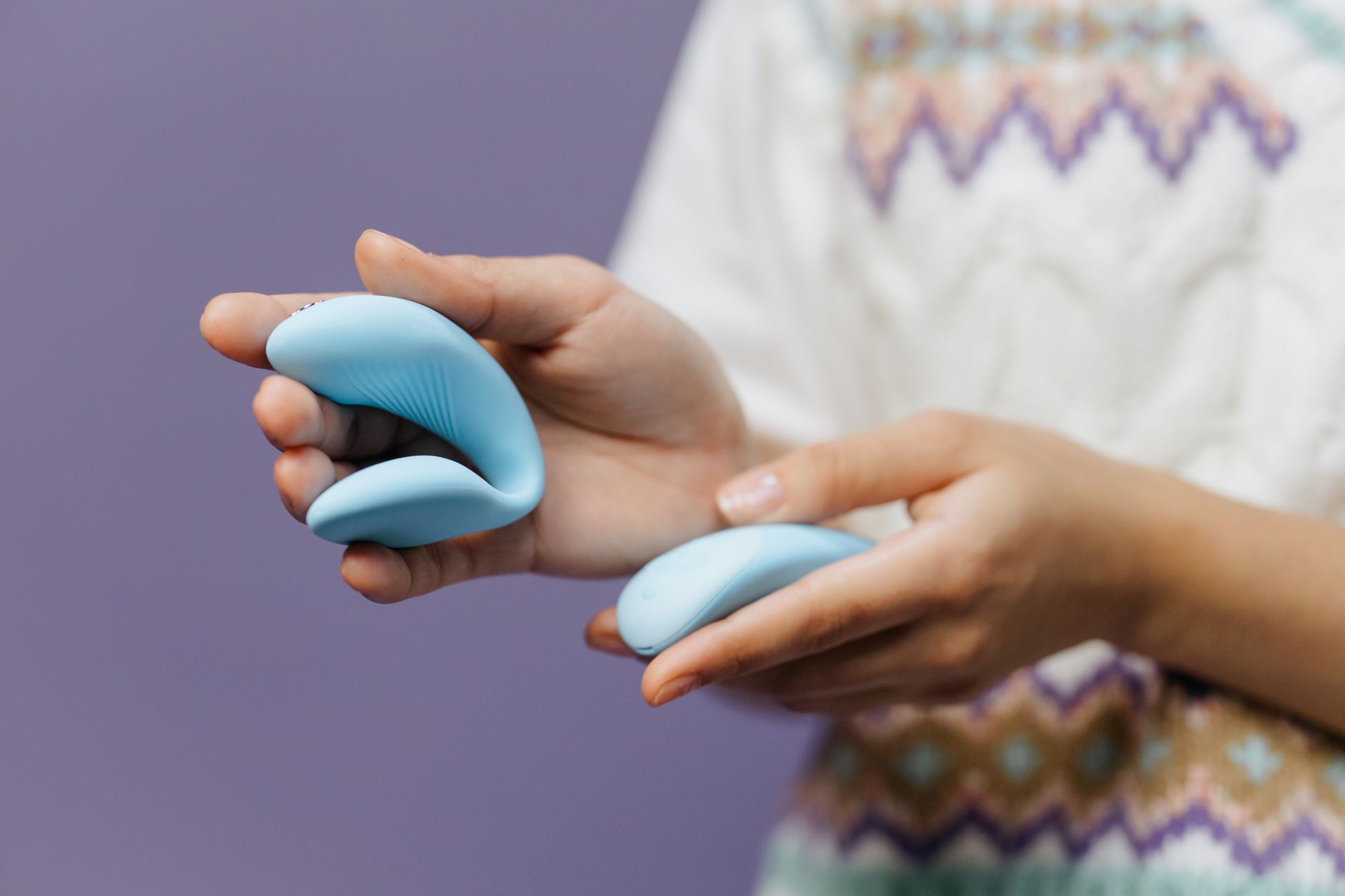
Let's start with what's really happening here
Your partner won't engage with the topic at all. The moment you mention pleasure, toys, or anything beyond the standard routine, the energy shifts. Maybe they change the subject. Maybe they get quiet. Maybe they make a joke and don't look you in the eye. This silence isn't about the toy. It's usually about shame, fear of inadequacy, or deeply embedded ideas about what's "normal" or "acceptable." Understanding that distinction is the first step.
Honestly, this is one of the most common barriers I see in couples. And it's fixable. It just requires a different approach than showing your partner a lemon vibrator and saying "I want to try this." You need to change the conversation first.
Why the avoidance pattern starts
Most people grow up in environments where pleasure, especially women's pleasure, is either absent from conversation or wrapped in shame. A partner who avoids talking about sex isn't being difficult. They're likely operating from deep, unspoken beliefs: "Real men satisfy their partners without toys," or "Wanting more means I'm too demanding," or even "Talking about this stuff is embarrassing." These beliefs run deeper than logic. They live in the nervous system.
When you introduce a toy directly, your partner's brain hears one of these things: "You're not enough." "I'm not satisfied." "You're failing." Even if that's the opposite of what you mean, that's what their defensiveness is protecting against. The avoidance isn't laziness. It's armor.
The good news: armor can come down, but not if you're pushing against it. You need to go around it.
Separate the toy conversation from the intimacy conversation
Here's the move that changes everything. Stop combining them.
Right now, if you mention wanting to introduce a lemon vibrator, you're implicitly bundling three conversations at once: "I want more pleasure," "I'm not satisfied," and "Let's try something new together." Your partner's nervous system is trying to process all three at the same time, which triggers shutdown.
Instead, start with just intimacy. "I've been thinking about us. I miss feeling close." That's a different conversation. It's not about performance. It's not about what you're missing. It's about connection. Let that land for a few days. Or weeks. Let them settle into the idea that you're trying to draw closer, not pull away.
Once that's established, introduce pleasure as a separate topic. Not toys. Just pleasure. "I want us both to feel good. I want sex to feel really good for me." That's a statement about you, not about them. Notice the difference. You're not asking them to do something. You're expressing something you deserve.
Only after those two conversations are grounded do you introduce the tool.
The introduction that doesn't trigger defensiveness
Timing matters. Not during sex. Not when you're frustrated or haven't had sex in a while (that amplifies the pressure he's already feeling). Pick a neutral moment when you're both relaxed and there's no urgency.
Frame it this way: "I found this toy that I think could feel really good for me. I'd like to try it, maybe alone at first, and then see if it's something we can explore together. I'm not looking for you to do anything different. I just want to feel what this is like."
Notice what's missing: you're not asking for permission. You're not asking him to be the one to use it. You're not suggesting he's failing. You're stating a boundary around your own pleasure. "I'd like to try this." That's ownership. That's self-directed, not partner-dependent.
If he asks what it does or why you want it, answer simply. Don't oversell. "It's a clitoral vibrator. Different sensation. I'm curious." That's enough. You don't need to convince him it's good. You just need him to know it's happening.
What to do if he still resists
Some partners will still push back. "You don't need that," or "I thought I was enough," or just uncomfortable silence. Here's where your tone matters more than your words.
Stay calm. Breathe. Don't defend yourself. Don't try to convince him it's not about him. Instead, return to the core statement: "This is about my pleasure. I deserve to explore what feels good for me. And I'd love to do that with you. But I'm going to do this either way."
That last part is crucial. You're not asking. You're informing. You're not asking his permission to want something. You're giving him the chance to be part of it, but making it clear his approval isn't a requirement.
Most partners soften when they realize this isn't conditional. You're not threatening to leave. You're not saying sex is bad. You're saying "I matter enough to care about how I feel." And honestly, that's attractive. It's not a threat to masculinity. It's confidence. And confidence is usually more interesting than compliance.
How to actually use the toy when he's in the room
If he's willing to try, start slow. Not slow as in low intensity. Slow as in low stakes. The first time, maybe he just watches. Maybe you use it on yourself while he's there. That removes the pressure that he should be doing something. He's not doing anything. He's witnessing your pleasure.
That's hot, actually. Most partners find it hotter than expected. Watching someone else enjoy themselves is different from feeling like you're responsible for the enjoyment. It takes the pressure off him and makes it about the actual sensation you're experiencing.
If and when he wants to help, great. Maybe he learns what patterns feel good. Maybe he uses it on you. But that's not the goal of this first conversation. The goal is just "you experience pleasure, and he gets comfortable with that."
The deeper shift that has to happen
This whole thing, honestly, is about permission. He needs permission to stop being the only source of pleasure. You need permission to want more. And both of you need permission to talk about it without shame.
A lemon vibrator is the tool. But the real work is the conversation. It's the willingness to say "sex should feel good for both of us" without embarrassment. It's the decision that pleasure is normal, not frivolous. It's recognizing that wanting more sensation, more intensity, or a different kind of touch isn't a reflection on your partner. It's just your body asking for what it needs.
Once that shift happens, the toy becomes simple. It's just a thing. A helpful thing. But not a referendum on the relationship.
When to get outside help
If your partner continues to shut down or becomes hostile, that's worth paying attention to. Shame is one thing. Controlling behavior is another. If he insists you can't explore pleasure, or makes you feel bad for wanting to, that's not a communication problem you can fix alone.
A couples therapist who specializes in sexual health can help you both move through this. Not because something is wrong with you. But because good relationships need people who can talk about what they want. If your partner can't get there, even with support, that's data about the relationship itself.
You deserve this conversation
Pleasure isn't luxury. It's part of being alive. And a partner who loves you should want you to experience it. That doesn't mean he has to like toys or understand them immediately. But it does mean he should care enough to try. To listen. To get curious instead of defensive.
When you use a lemon vibrator, you're not just experiencing different sensation. You're practicing the act of putting yourself first. You're saying "my body matters." That matters. And if your partner comes along for the ride, even better.
People also ask
How do I bring up sex toys without my partner feeling inadequate?
Separate the conversations. Start with intimacy and connection first. Let that settle. Then talk about your own pleasure as something you deserve, not something he's failing to provide. Finally, introduce the tool. Frame it as exploration, not a complaint about his performance. "I want to feel new things" is different from "You're not doing it right." One is about you. The other sounds like blame.
What if my partner thinks toys mean I'm not attracted to him?
This belief usually comes from a mix of insecurity and outdated ideas about sexuality. The best counter isn't logical. It's relational. Show him you want him there. Use the toy together. Let him watch. Let him participate if he wants to. When he sees that pleasure doesn't replace him, and might actually make you more present and connected, the belief usually shifts. It takes time. But it works.
Can I use a lemon vibrator solo if my partner won't discuss it?
Absolutely. Your pleasure doesn't require his approval. But if you're hoping for a connected sex life, eventually the conversation needs to happen. Using toys alone is healthy and valid. But some couples eventually want to integrate that into partnered time. If that's the goal, the conversation stays important, just lower pressure and after you've both had time to adjust.
How long should I wait before bringing up the toy again if he said no?
Depends on how he said no. If it was a hard "I don't want to talk about this," give it space. A few weeks. Then try again with a different angle. "I've been thinking about what you said. I still want to explore this. Can we talk about why it bothers you?" That opens it up for curiosity instead of defensiveness. If he said no once and you've brought it up repeatedly, he may need to see consistency first. You live your life, explore your pleasure, and don't keep asking. When he sees that this is part of your life whether he engages or not, the power dynamic shifts.
What if we fight every time sex comes up?
This is beyond toys. This is a communication pattern that's stuck. A couples therapist can help you both learn to discuss intimacy without it becoming a conflict. Toys don't fix that. Only better communication does. Look into a therapist who specializes in couples and sexual health. It's worth it.
Can a lemon vibrator actually improve our sex life if communication is broken?
No. A toy can improve sensation and pleasure, yes. But it can't fix relational disconnection. If the underlying issue is that you can't talk about what you want, a new toy won't change that. Work on the communication first. The toy comes after.
The bottom line
Using a lemon vibrator when your partner avoids pleasure conversations isn't really about the vibrator. It's about giving yourself permission to have pleasure matter. It's about refusing to shrink your needs to make someone else comfortable. And it's about creating the conditions for a conversation that needs to happen anyway.
Your partner's avoidance is usually rooted in fear, not malice. But your pleasure is non-negotiable. The two things can be true at the same time. Go slow. Be clear. And know that wanting more, for yourself and for the relationship, isn't selfish. It's the only path to real intimacy.