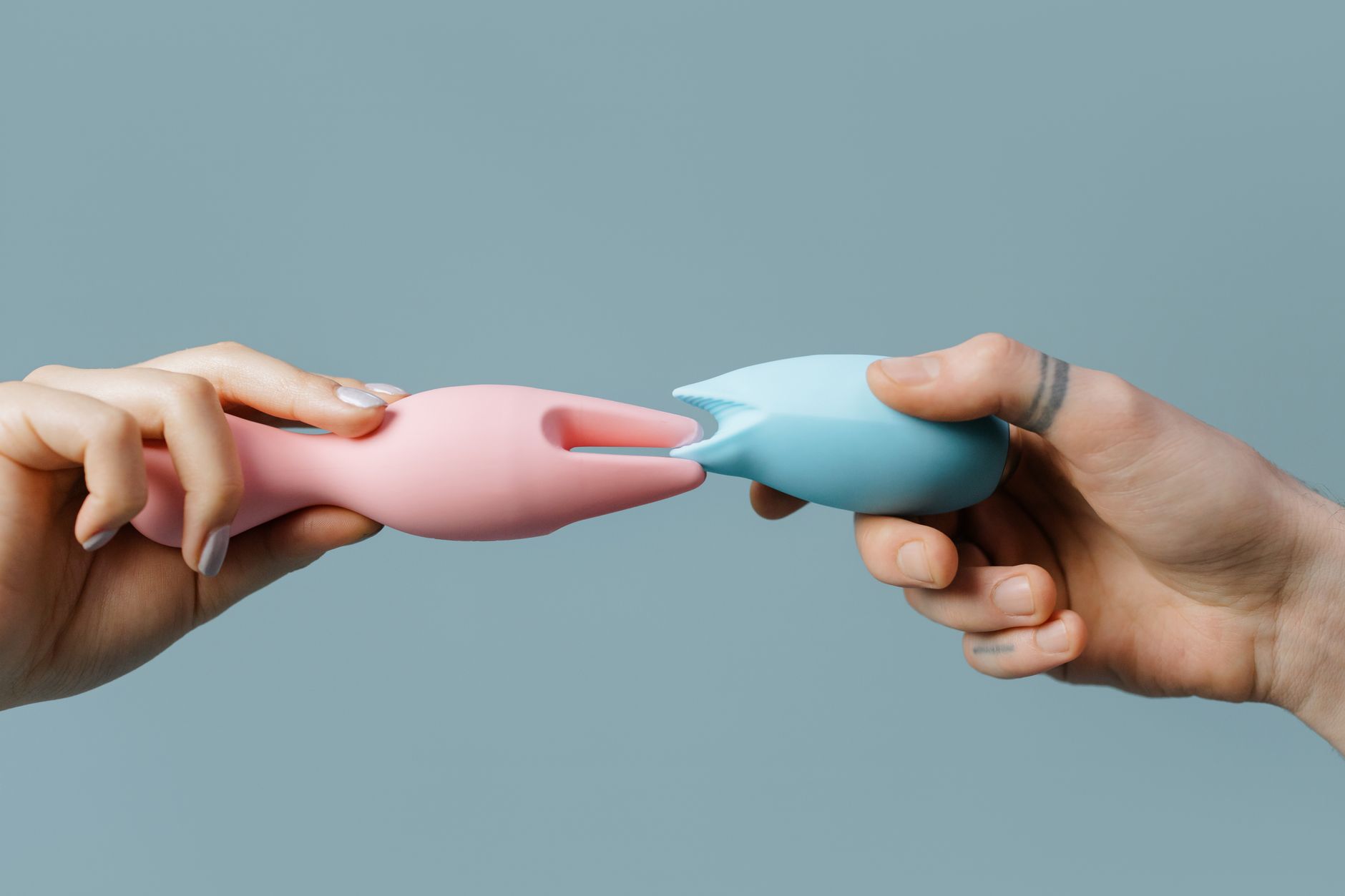
Let's name what's actually happening
You're holding a lemon vibrator for the first time and your brain is screaming. Not from excitement. From the chatter. What if it feels weird? What if I'm doing it wrong? What if I can't orgasm with it? What if I'm broken? That spiral is anxiety, and I want you to know: it's not a sign you shouldn't do this. It's a sign your nervous system is protecting you from something unfamiliar, which is exactly what nervous systems do.
Anxiety makes first-time pleasure feel like a performance test instead of exploration. And the harder you try to quiet the anxiety, the louder it gets.
Here's what actually works: stop fighting it. Lean into it instead.
Understanding the anxiety paradox
Most people assume anxiety means something is wrong. Actually, anxiety before trying a lemon clitoral vibrator just means you care about the experience. Your body is alert because this matters to you. That's not a barrier. It's an invitation to slow down.
Three things happen when you're anxious about pleasure. First, your pelvic floor tightens. Second, your blood pressure rises slightly, which can make sensation feel muted or overwhelming. Third, your mind stays up in your head instead of dropping into your body. None of these are permanent. All three respond to one thing: patience.
Anxiety also lies. It tells you there's a right way to use a lemon vibrator, that you should orgasm faster, that something is wrong with you if you don't. None of that is true. Pleasure is not a destination. It's information. And information takes time to gather.
Building a nervous-system-friendly setup
Before you touch a lemon vibrator, you're choosing your environment. I know that sounds basic, but anxious people often skip this step because they feel like they should just "get over it" and use the toy. Your nervous system doesn't work that way.
Start with safety. Lock the door, silence your phone, set a timer (even 20 minutes is enough). Tell your nervous system: we are protected. We have time. No one is coming through that door. This isn't paranoia. This is giving your body the information it needs to downregulate.
Temperature matters. A cold lemon vibrator is a jolt. Warm it under warm water for 30 seconds, or hold it in your hands for a minute. Your skin feels safer when the object is warm. It feels less clinical, more inviting.
Lubrication is non-negotiable. Even if you're naturally lubricated, add a bit more. Water-based lube reduces friction, which reduces the stimulation you need to process. Less intensity means less anxiety. A clitoral vibrator gliding on a slippery surface feels gentler, more controlled. You're in charge, not the toy.
Wear something you love. Not something you think you should wear. Some people need to stay clothed at first. Others want to be totally nude. There's no rule. What matters is that your nervous system recognizes the signal: this is play, not obligation.
Starting smaller than you think you need to
The lemon vibrator has intensity settings. Most anxious first-timers jump to level 3 or 4, thinking they need enough sensation to "feel something." That's backwards. Start at level 1. It will feel subtle. That's the point.
At level 1, your nervous system is learning two things at once: what vibration feels like, and that you're safe. Level 1 gives your brain time to process both without feeling overwhelmed. If after 30 seconds level 1 feels too subtle, go to level 1.5 or 2. But start low.
Many people find that anxiety actually decreases once they realize the sensation is smaller than their imagination built it up to be. The mental rehearsal is always scarier than the reality.
Touch before vibration
Here's something that changes everything: use your lemon vibrator as a still toy first. Hold it against your clitoris without turning it on. Let your skin get accustomed to the shape, the temperature, the weight. One to two minutes of this is not wasted time. It's your nervous system's version of a handshake with the toy.
When you're ready, turn it on at level 1 and keep it still. Don't move it yet. Let the vibration travel into your body, up through your clitoris, into your vulva and pelvic floor. Movement comes later. For the first session, stillness is your friend.
Anxious brains like to feel in control. Keeping the toy still while you're learning what it feels like is a way of saying: I decide what happens here.
The role of breathwork when fear shows up
When anxiety spikes, your breathing gets shallow. Your nervous system interprets shallow breathing as evidence that danger is real, so it tightens your pelvic floor more. This is the feedback loop that makes everything harder.
Breathing breaks the loop. If you notice your chest is tight or your breath is short, pause. In for a count of four. Hold for one. Out for six. Do this three times. The longer exhale tells your nervous system: we're safe now, you can relax.
Do this between intensity levels. Do this if sensation feels overwhelming. Do this whenever you notice you've stopped breathing naturally. Breath is the fastest way to tell your nervous system that you're in control, not the vibrator.
When to stop, and why stopping isn't failure
You might get five minutes in and feel done. That's not failure. That's information. Your nervous system might be saying: enough newness for today. Honor it. You didn't "fail" at using a lemon vibrator any more than you failed at a first kiss that felt awkward. You gathered data. You learned.
Some people need three sessions before they feel relaxed enough to explore deeper sensation. Some need ten. There's no timeline. Anyone who tells you there's a normal speed for this is wrong.
If you try and it feels genuinely painful, uncomfortable in a non-nervous way, or distressing, stop and check in with yourself. Pain is different from anxiety. Pain is your body saying no. Anxiety is your body saying "I'm not sure yet." Learn to hear the difference.
Reframing pleasure as information gathering
Anxiety thrives on performance metrics. Did I orgasm? Did I do it right? Did it feel amazing? None of those are the right questions on a first try.
Better questions: What did that feel like? Where did I feel it? Was it more intense than I expected or less? What would I change next time? What surprised me? These are questions of curiosity, not judgment. Curiosity quiets anxiety.
First-time lemon vibrator sessions are research. You're learning how your body responds to this particular stimulation. You're learning what speed and pressure feels good. You're learning if you prefer it still or moving. You're learning what your nervous system needs in order to relax.
Orgasm might happen. It might not. Both are completely normal. Both are useful data.
After the session: integration matters
When you're done, don't jump straight back into your day. Sit with yourself for a few minutes. Notice what your body feels like. Notice what emotions are present. Maybe you feel relaxed. Maybe you feel vulnerable. Maybe you feel confused. All are fine.
Clean your lemon vibrator (warm water, gentle soap, air dry), store it somewhere you'll see it again, and give yourself credit for doing something that scared you. That took courage. Not because there's anything dangerous about a clitoral vibrator, but because you faced the anxiety instead of letting it stop you.
FAQ: First-time anxiety and lemon vibrators
Will a lemon vibrator hurt my clitoris?
No. Your clitoris is tougher than you think and designed for sensation. A lemon vibrator on low intensity is gentler than many other stimuli your body handles fine. If pain appears, it's usually a sign of tension (pelvic floor too tight) or that you need more lubrication. Turn it off, take a breath, and try again later.
How long should my first session be?
There's no rule. Some people explore for 5 minutes. Others for 30. Your nervous system will tell you when it's had enough. Respect that signal. Longer is not better. Curious and comfortable is.
What if I can't feel anything?
Most likely, your pelvic floor is tense from anxiety. Tensioning reduces sensation. Take a break, breathe, and come back tomorrow or in a few days. Your body isn't broken. It's protecting itself. Sometimes the second or third session feels completely different because your nervous system has had time to settle.
Can I use a lemon vibrator if I'm on antidepressants?
Yes. Some antidepressants reduce sensation, but many people still experience pleasure and orgasm. If you've noticed numbness, the vibration might actually help create enough stimulation to reach sensation. If you're unsure, talk to your doctor, but don't let worry stop you from trying.
Should I use it alone or with a partner the first time?
Alone is usually easier for anxious first-timers. You don't have to manage your own nervous system and worry about someone else's reaction. Alone means zero performance pressure. You can take as long as you need. The lemon clitoral vibrator will still be there when you're ready to explore with a partner, and you'll know your own body better by then.
What if my anxiety comes back on a second or third try?
It might. New things can feel uncertain for a while. This doesn't mean you're doing anything wrong. It just means your nervous system needs more data that this experience is safe. Each time you try, it gets a little easier. The anxiety usually decreases faster than you'd expect.
Your nervous system already knows how to relax
The anxiety you feel before trying a lemon vibrator isn't a character flaw or a sign that you're broken. It's your body being careful. And careful bodies, given time and patience and the right conditions, learn to play. They learn to feel. They learn what pleasure tastes like.
You don't need to be confident to start. You just need to be willing to move at your own speed and trust that your nervous system will catch up. It will. It already knows how.