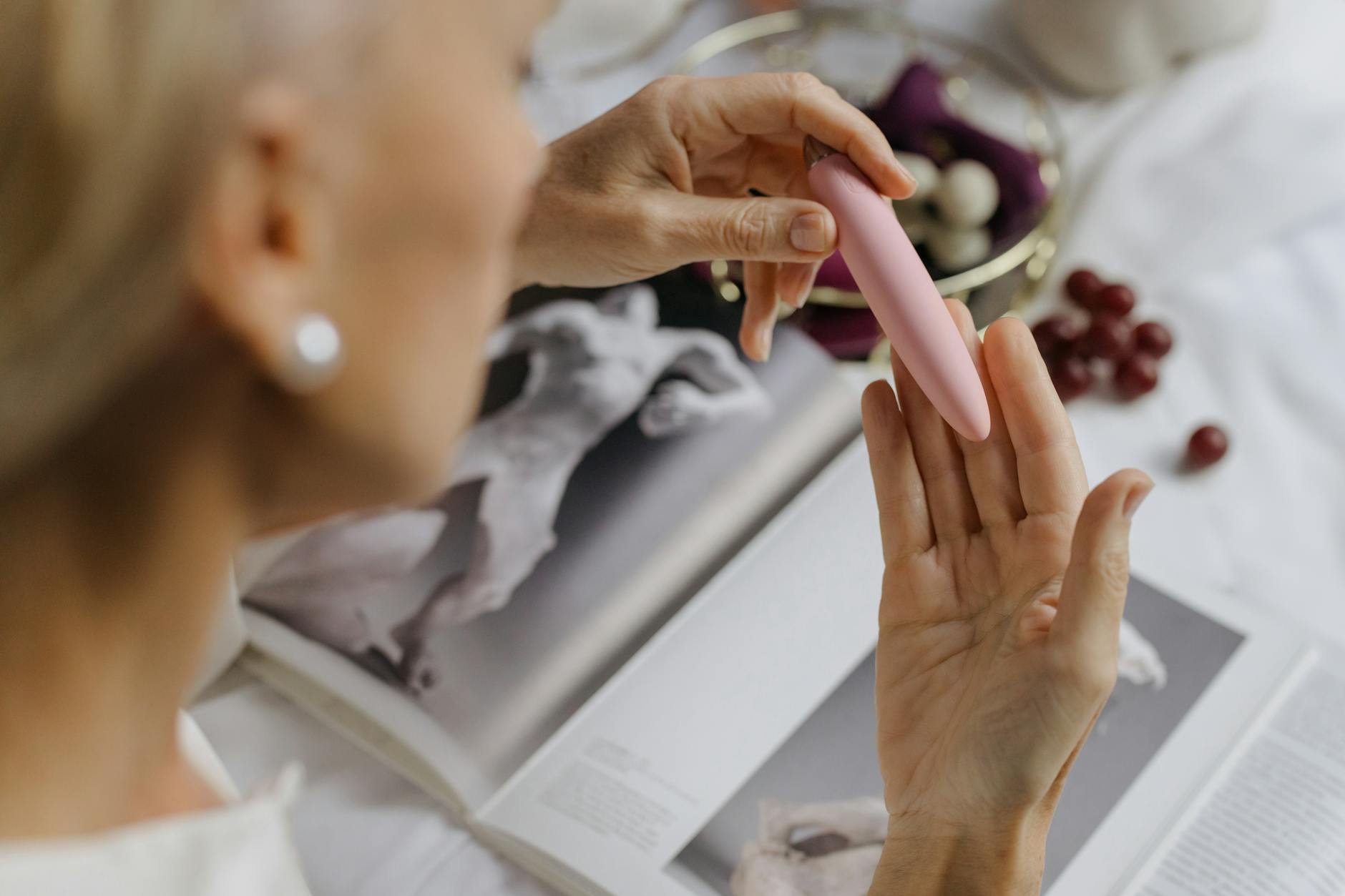
Let's be real about what hormonal IUDs do to sensation
You got a hormonal IUD inserted. It's effective, low-maintenance, and works. But then your body changed in ways nobody explained clearly. Your arousal timeline shifted. Sensation feels different. That orgasm that used to arrive reliably now requires a longer warm-up, or feels more muted when it does happen.
Here's what's actually happening: hormonal IUDs release a steady, localized dose of progesterone (or levonorgestrel, depending on the device). Unlike birth control pills, which cycle hormones, an IUD maintains constant hormone levels. Your brain doesn't notice the shift as much as your body does. Estrogen drops subtly. Libido often dips for the first three to six months. Sensation can feel blunted.
The good news is this is not permanent, and it's not broken. It's an adjustment.
Why sensation often feels different after IUD insertion
Three specific things happen:
1. Progesterone increases appetite suppression and calming effects. This is why the IUD works so well for people with heavy or painful periods. But the same hormonal shift that quiets inflammation also quiets arousal signaling. Your brain receives the pleasure signal, but it feels like watching it through glass.
2. The device itself takes up space. The IUD sits in your uterus, the arms extend into the fallopian tubes. You don't feel it during daily life, but the pelvis knows something is there. Some people report reduced sensation during deep penetration or during orgasm itself because the pelvic floor tenses differently around the foreign object.
3. Baseline estrogen drops further than with hormonal pills. Hormonal IUDs suppress ovulation less completely than pills do, which means your body still attempts to cycle. But the cycling is dampened, and overall estrogen stays lower. Thinner vaginal tissue, reduced lubrication, and slower arousal are the result.
None of this means you've lost the capacity for pleasure. It means the pathway to pleasure has widened slightly. You'll need different tools or techniques to reach the same destination.
How lemon clitoral vibrators help specifically after IUD insertion
Here's why a lemon vibrator, or any quality clitoral vibrator, becomes useful after IUD placement:
Air-suction technology bypasses sensation dampening. Lemon vibrators use gentle suction rather than direct vibration. This stimulates the clitoral complex through a different neural pathway than typical vibrators. The mechanism doesn't require the same level of baseline arousal to trigger response. You're essentially routing around the progesterone-induced dampening.
Clitoral stimulation is largely independent of uterine sensation. Because the IUD sits in the uterus, stimulation of the clitoris (which is external or just under the surface) doesn't directly interact with the device. You get clean, uninterrupted sensation without the pelvic tension or odd pressure that sometimes accompanies deep internal stimulation in the first months after insertion.
Consistency helps rebuild your arousal baseline. Using a lemon vibrator regularly, even just for five to ten minutes a few times a week, retrains your nervous system to respond to pleasure signals. It's not meditation. It's practical. Your body learns the pathway again.
The practical adjustment: settings and timing
If you're used to a particular vibrator intensity before your IUD, start one or two settings lower after insertion. The progesterone dampening means you're already receiving a subtler signal. Adding maximum intensity on top of dampening can feel jarring or numb, rather than pleasurable.
Start at the lowest setting. Spend five minutes here, no pressure to build toward anything. Let your body remember what sensation feels like without the urgency.
Warm up longer than you used to. Budget fifteen to twenty minutes instead of ten. This isn't a failing on your part. Progesterone naturally slows arousal onset. Work with it.
Use lubricant even if you don't think you need it. Hormonal IUDs often cause subtle dryness in the first three to six months. A water-based lube reduces friction and makes clitoral stimulation feel richer, not sticky. This is especially true if you're using a lemon clitoral vibrator, which works best with minimal friction.
Return to higher settings only after two to three weeks of consistent use. This isn't forever. Your body adjusts to the progesterone. By month two or three, most people report arousal returning closer to baseline. Then you can experiment with the intensity range you preferred before.
The emotional adjustment: separating frustration from physiology
Here's the part nobody warns you about: the frustration phase. You knew insertion would change your period. You didn't expect it to change your sex life. Partners don't expect it either. The temptation is to think something is wrong with the relationship, with your body, or with your partner's technique.
Often, it's just progesterone.
If you have a partner, name this specifically. "My IUD is making arousal slower for the first few months. We can rebuild this with more time, lubricant, and a vibrator. This is temporary and normal." That conversation prevents resentment from building.
If you're exploring pleasure solo, the shift is easier to work with. You're not calibrating anyone else's expectations. You're just learning your new baseline.
When to worry (and when not to)
Some sensation changes are expected. Others are worth flagging to your doctor.
Expected: Reduced libido for the first two to four months. Slower arousal. Slightly numb sensation during orgasm. Reduced lubrication.
Talk to your doctor if: Pain appears during sex or with the vibrator (this can indicate infection or improper IUD placement). Sensation doesn't begin returning after four to six months (sometimes progesterone sensitivity needs adjustment). You experience loss of sensation paired with mood changes, fatigue, or depression (this might indicate the IUD isn't the right fit for your body, and other contraception might serve you better).
The timeline: what to expect
Weeks one to three after insertion feel the most jarring. Your body is inflamed from the procedure, hormones are ramping up, and sensation feels genuinely muted. This is the phase to use a lemon vibrator at the lowest settings, without expectation of intense response. You're rebuilding baseline arousal, not chasing orgasm.
Weeks four to twelve, arousal begins returning. Sensitivity gradually increases. This is when you can experiment with higher intensity settings. If you use a lemon clitoral vibrator during this phase, you'll likely notice the return of pleasure more clearly than you would without it.
Months three to six, most people report near-baseline arousal and sensation. Your body has adapted to the progesterone. The IUD stops feeling foreign. Sex starts feeling like sex again.
This doesn't mean every person follows this timeline perfectly. Some people adjust faster. Some plateau at month two and stay there (which is also fine). Pay attention to your body, not a calendar.
Rebuilding sensation with your partner
If you have a partner, the IUD insertion is an opportunity to slow down and rebuild intimacy intentionally. Because sensation is dampened anyway, the pressure to perform or reach orgasm quickly disappears.
Try sensate focus exercises, which remove orgasm as the goal and focus on sensation itself. A lemon vibrator becomes one tool in this practice, not the main event. Your partner can also learn which patterns and intensities now trigger response, now that your baseline has shifted.
The couple that adjusts together after IUD insertion often emerges with deeper understanding of each other's bodies. It requires patience, but the payoff is real.
FAQ: Lemon Vibrators and Hormonal IUDs
Can I use a lemon vibrator immediately after IUD insertion?
Wait one week. Your cervix and uterus need to settle. After one week, gentle clitoral stimulation with a lemon vibrator at the lowest setting is safe. Avoid any stimulation that puts direct pressure on the lower abdomen or pelvis.
Will a lemon vibrator interact with my IUD?
No. The clitoral vibrator stimulates the external clitoris or the clitoral complex just under the skin. The IUD sits inside the uterus, above the cervix. They don't touch. Internal vibrators designed for G-spot or A-spot stimulation might feel strange or uncomfortable in the first months after insertion because they can shift the IUD slightly or press against the inflamed uterus. Stick with external lemon clitoral vibrators until you're past month two.
How often should I use a lemon vibrator to rebuild sensation?
Three to four times weekly is ideal for the first two months. This is enough to retrain your nervous system without creating dependency. After that, use it as you normally would. Consistency matters more than frequency.
Does an IUD cause permanent sensation loss?
No. Most people report full or near-full return of baseline sensation by month four to six. If sensation remains significantly dampened beyond six months, talk to your doctor. Sometimes progesterone sensitivity is individual, and a different contraceptive method might suit you better.
Should I tell my partner about using a lemon vibrator after my IUD?
Yes, especially if you share a bed or intimate life together. Honesty prevents confusion and resentment. A lemon vibrator isn't replacing your partner. It's a practical tool for rebuilding arousal while your body adjusts to progesterone. Most partners are relieved to understand why sensation shifted and grateful for a clear way to support the adjustment.
Can progesterone dampening be offset with a higher-intensity vibrator?
Partially. A higher-intensity vibrator can overcome some of the dampening. But starting at lower settings and building up over two to three weeks is better than jumping straight to maximum. You avoid the jarring sensation of overstimulation and allow your body's baseline response to return naturally. A lemon clitoral vibrator at mid-range intensity usually feels better than maximum intensity on another device once you've adjusted.
The bottom line
A hormonal IUD changes your body in ways that ripple through pleasure and arousal. This is not a failure of the IUD or your body. It's physiology. A lemon vibrator can bridge the gap while your nervous system recalibrates. Patience, lower settings, longer warm-ups, and lubricant are your allies. By month three or four, most people report pleasure returning to normal or better. If it doesn't, your doctor is a resource. You deserve pleasure after contraception insertion, not as a consolation prize, but as part of your baseline health.