When distance becomes its own kind of tension
You've done the work. The conversations happened. You're sleeping in the same bed again, laughing at dinner, remembering why you chose each other. But physical intimacy still feels like learning a foreign language all over again. Touch is tentative. Desire feels buried under months of careful distance. And sex, when it happens at all, carries the weight of all that time you weren't close.
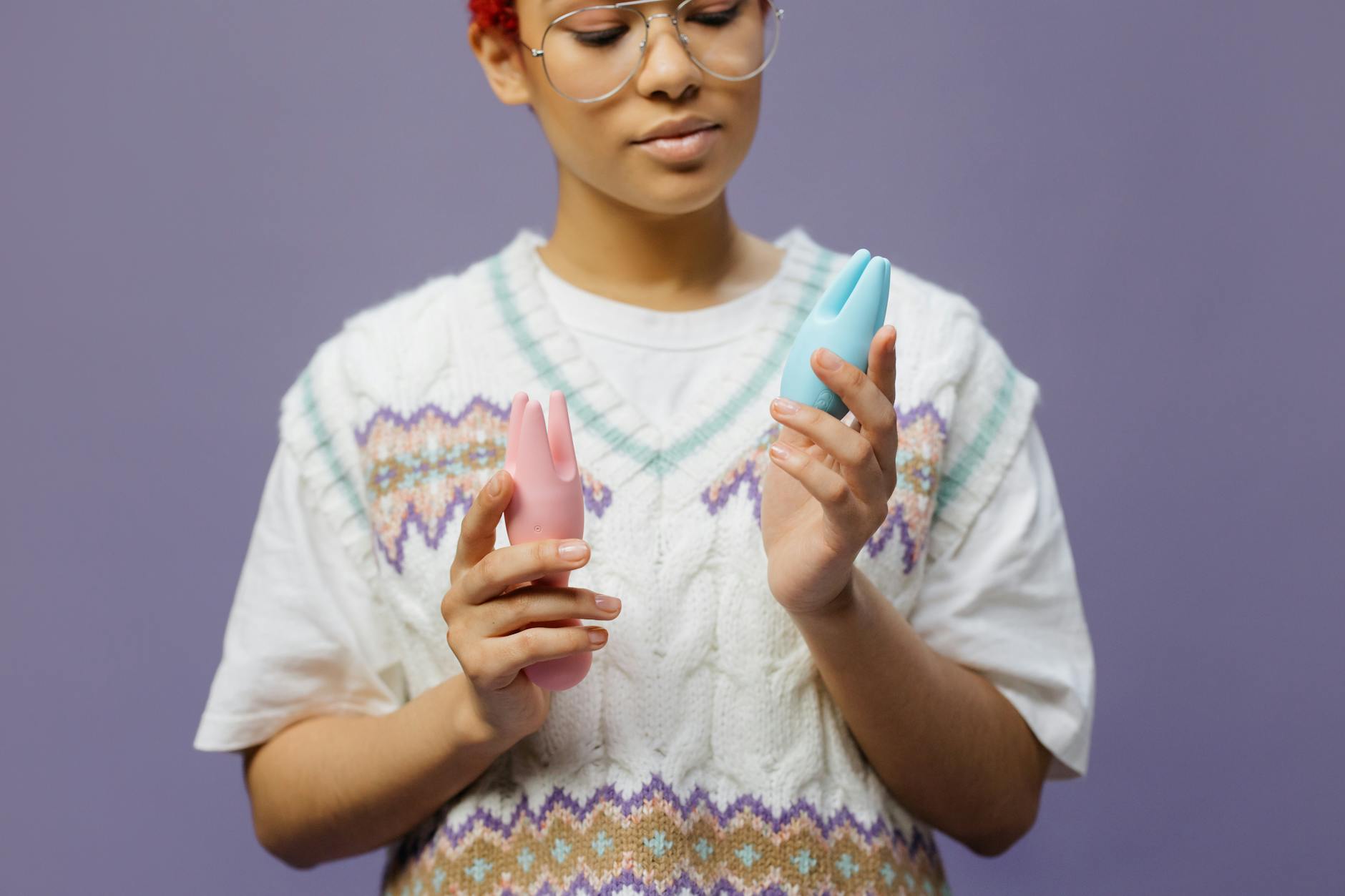
This is the moment where a clitoral vibrator like the Lem can be genuinely transformative. Not as a band-aid, and not as a performance aid. But as a literal reset button for pleasure.
Here's why: pleasure has its own pathway back. Desire follows. Intimacy deepens when both of you remember what it feels like to experience sensation together. A lemon vibrator can shortcut the awkwardness of rediscovering your bodies and give you both permission to stop performing and start feeling again.
Understanding what reconnection actually requires
Before you introduce anything new, let's name what's actually happening in your nervous systems. After a period of distance, your bodies have learned to be cautious. Touch isn't automatically interpreted as safe or pleasurable. Your brain is still in low-trust mode, even if your emotional connection is rebuilding.
Shared pleasure is one of the fastest ways to rewire that nervous system response. When you both experience sensation and arousal together, you're literally resetting your threat detection. You're showing each other: "You are safe. This body is safe. Desire is safe here."
This is why introducing a lemon clitoral vibrator works differently after reconnection than it might have in a steady, ongoing relationship. You're not adding novelty to something that already feels comfortable. You're using novelty to make comfort possible again.
The Lem specifically works well in this context because its suction-based stimulation feels distinct from manual touch. It's not a replacement for your partner. It's a third presence that creates permission for both of you to relax into sensation without the performance pressure of "Do I feel this? Am I responding right? Is my partner getting what they need?"
Timing: when the conversation should happen
Here's the mistake most people make: they choose a moment when they want to have sex to bring it up. That's backwards.
You want to introduce the idea of a lemon clitoral vibrator when you're clothed, fed, and not in the middle of trying to be intimate. Saturday morning coffee. A walk. Sitting on the couch watching something stupid. Anywhere you both feel relaxed and not touched-out or emotionally raw.
The opener matters. You're not saying: "I want to spice things up." That language carries pressure, and it implies the current situation is boring or failing. After reconnection, that lands wrong.
Instead: "I've been thinking about ways we can both feel more comfortable getting back to pleasure together. And I found something that might actually help with that."
Or: "I realized that I've been in my head a lot. Something that might help me get out of my head and actually feel things is [a clitoral vibrator]. Would you be interested in exploring that together?"
Notice what's not happening here: you're not apologizing for the distance, you're not asking permission, and you're not framing it as fixing a problem. You're naming a concrete tool that serves both of you.
The conversation that actually works
Your partner might say yes immediately. More likely, they'll have questions or hesitation. Both are fine.
If they ask why you want this specifically, be honest. "I think it might help me feel less anxious about my body and sensation right now." Or: "After everything, I want to remember what pleasure feels like, and I think this could help both of us."
If they seem resistant, don't push in the moment. Say: "I'm not asking for a yes right now. I just wanted to put it on the table. If you want to think about it, that's completely fine."
Resistance after reconnection often comes from a few predictable places.
One: they're worried it means they're not enough. Address this directly. "This isn't about you not being enough. It's about me needing something that helps me feel safe in my own body right now. I want you there with me when we use it."
Two: they're worried it means you didn't miss them. Also address it. "I missed you incredibly. And I'm nervous about sex right now. This is about getting over that nervous part, not about replacing you."
Three: they're genuinely uncomfortable with vibrators, period. Then you've got a longer conversation about what they're actually uncomfortable with. Is it the idea of solo pleasure? Is it about gender roles? Is it actual shame? Those are solvable, but not in a single conversation.
How to use a lemon vibrator together after distance
Assuming you've both agreed to try this, here's how to make it feel natural rather than performative.
Start when you're already close. Kissing. Hands on skin. Not a separate act. The Lem or another lemon clitoral vibrator isn't the main event. It's part of the landscape of touch.
One of you holds it. Usually the person with the vulva, but not always. Experiment. Some people find it incredibly grounding to have their partner hold it and control the pace. Others need the agency of holding it themselves. There's no single right way.
Start at a lower pattern. The Lem has multiple settings. You're not trying to reach orgasm on the first attempt. You're remembering what sensation feels like. You're rebuilding the neural pathway between touch and pleasure.
Talk during it. Not dirty talk necessarily, though that's fine too. But simple stuff: "Does that feel good?" "Want me to try another pattern?" "I love watching you like this." The talking serves two purposes. It keeps you both present instead of in your heads. And it reminds you both that this is collaborative.
Don't make orgasm the goal. After distance, the pressure to come can be paralyzing. If it happens, great. If it doesn't, that's also fine. What matters is that you both felt sensation and that you did it together.
What happens after the first time
You might feel closer immediately. You might feel awkward. You might feel like you need to process it. All normal.
The conversation after matters as much as the one before. Not a heavy one. But: "That felt good. How did you feel?" Or: "That was weird in a good way." Or even: "I need a minute to sit with that, but I want to do it again."
Many couples find that after reconnecting with shared pleasure, their physical intimacy outside of vibrator use also loosens up. The first time back to sex after distance is always tender. But once you've reminded your bodies that pleasure together is possible, touch becomes less fraught.
You don't need to use a lemon clitoral vibrator every time. The point isn't to create a new dependency. It's to use it as a bridge from nervous disconnection back to confident touch. Some couples use it regularly. Others use it occasionally. Some use it to reconnect after stressful periods and then set it aside for months.
The key is that it's there as a tool that works specifically for the kind of reconnection that feels safe and gradual.
When to consider a therapist conversation first
If the distance was caused by infidelity, sustained emotional abuse, or a breach of trust around sexual boundaries, introducing a vibrator solo won't fix it. You might both benefit from working with a therapist before bringing new tools into the bedroom.
A therapist can help you rebuild the actual trust, which makes the pleasure part land differently. Without that foundation, a clitoral vibrator just becomes another thing that feels pressured.
But if the distance was circumstantial—a long work project, a health crisis, just falling out of rhythm—then a lemon vibrator is exactly the kind of concrete, shame-free tool that helps you both remember why being close feels good.
The deeper shift that happens
What I've noticed in my own practice is that couples who introduce a clitoral vibrator during reconnection often experience a subtle shift in how they think about pleasure generally. It stops being something you do to or for each other. It becomes something you explore together.
That shift in perspective carries into other areas. You get more comfortable asking for what you want. You get less defensive about your partner's needs. You remember that desire isn't a fixed thing that exists or doesn't exist. It's something you can actively build, together.
A lemon vibrator is a small tool. But in the context of reconnection, it can be revolutionary. It gives permission. It removes performance pressure. It creates a shared experience of pleasure that reminds both of you why the work to get back to each other was worth it.
People also ask
How do I know if my partner will be open to using a clitoral vibrator?
You won't know until you ask. But you can gauge openness by how your partner has responded to other kinds of vulnerability or novelty in the relationship. Have they been willing to try new things in other areas? Have they responded well when you've brought up difficult topics? That usually predicts how they'll respond to this conversation. Start small, don't push, and remember that reluctance often comes from fear, not rejection.
Is it normal to feel awkward the first time using a lemon clitoral vibrator together?
Completely. Awkwardness usually means you're trying something new that matters. The best thing you can do is acknowledge it: "This feels weird" or "I'm a little nervous," and then keep going anyway. The awkwardness almost always fades after the first time or two.
What if we try it and one of us doesn't like it?
Then you stop using it. Not every tool works for every person, and that's okay. What matters more than the specific vibrator is that you were both willing to experiment together. The act of trying something new in service of reconnecting often matters more than whether you end up liking that specific thing.
Can a lemon vibrator actually help rebuild intimacy after a rough period?
Yes. Not as magic, but as a concrete way to remind your nervous systems that pleasure together is possible. It creates a shared experience, removes some of the performance pressure, and gives you both a starting point for rebuilding physical confidence. It works best when paired with actual emotional reconnection and willingness from both partners.
Should we use a lem vibrator or try something else?
The Lem is specifically designed with clitoral pleasure in mind, and its suction-based technology works differently from traditional vibrators, which can feel less pressuring after periods of distance. That said, the vibrator is less important than the conversation and the willingness to try. If the Lem doesn't feel right, there are other lemon clitoral vibrators and other tools that work well for couples reconnecting.
What if we can't talk about this without it feeling awkward?
Practice. Start with small, low-stakes vulnerability. Text it if you need to. Say "I wrote down what I want to say because I'm nervous" and read it. The awkwardness of the conversation usually eases quickly once you've had it once. And sometimes the awkwardness itself is where the real reconnection starts.
The real work starts with conversation
Introducing a lemon vibrator after reconnection isn't really about the vibrator. It's about saying out loud that you both deserve pleasure, that your bodies matter, and that you want to experience sensation together again.
That's the hard part. The actual tool is easy.
If you're ready to have that conversation but not sure how to start, you can always reach out. We're here to help you think through the words that feel true for your specific relationship.